

Understanding the process helps diners set realistic expectations and make better choices for dine-in, takeaway and group meals. It also explains why wood-fired pizzas may arrive progressively and why a menu with disciplined combinations can be more effective than unlimited customisation.
The work begins before the restaurant opens
Dough needs time. Mixing develops structure, while fermentation changes flavour and creates the gas that can expand in the oven. Temperature, hydration and schedule all influence the result. A restaurant plans this preparation around expected service rather than starting each dough ball after a customer orders.
Portioning helps create consistent bases. The dough then rests so it can be stretched without fighting back. If it is too cold, too young or over-fermented, shaping becomes more difficult. The pizza maker reads the dough in front of them and adjusts handling within the style the restaurant serves.
Toppings also require preparation. Vegetables may be washed and cut, cheeses portioned, sauces made or readied, and proteins handled according to the recipe. A clear station matters because wood-fired baking moves quickly once the shaped base is topped.
The order becomes a controlled assembly
When a ticket reaches the kitchen, the pizza maker confirms the recipe and approved variations. The base is opened by hand or with the restaurant’s chosen method, keeping a rim and an even centre. Sauce is spread with enough coverage for flavour but enough restraint for the base to bake.
Toppings are placed for distribution, not simply height. Ingredients that release water need particular care. Cheese must melt and brown without insulating everything below it. A variation can change that balance, which is why removing one item is often simpler than adding several extras.
The Venice menu lists multiple wood-fired combinations alongside pasta, risotto, seafood, meat, poultry, salads and sides. A focused menu lets diners choose a designed pizza while still giving a mixed group other paths through the meal.
A wood-fired oven demands continuous attention
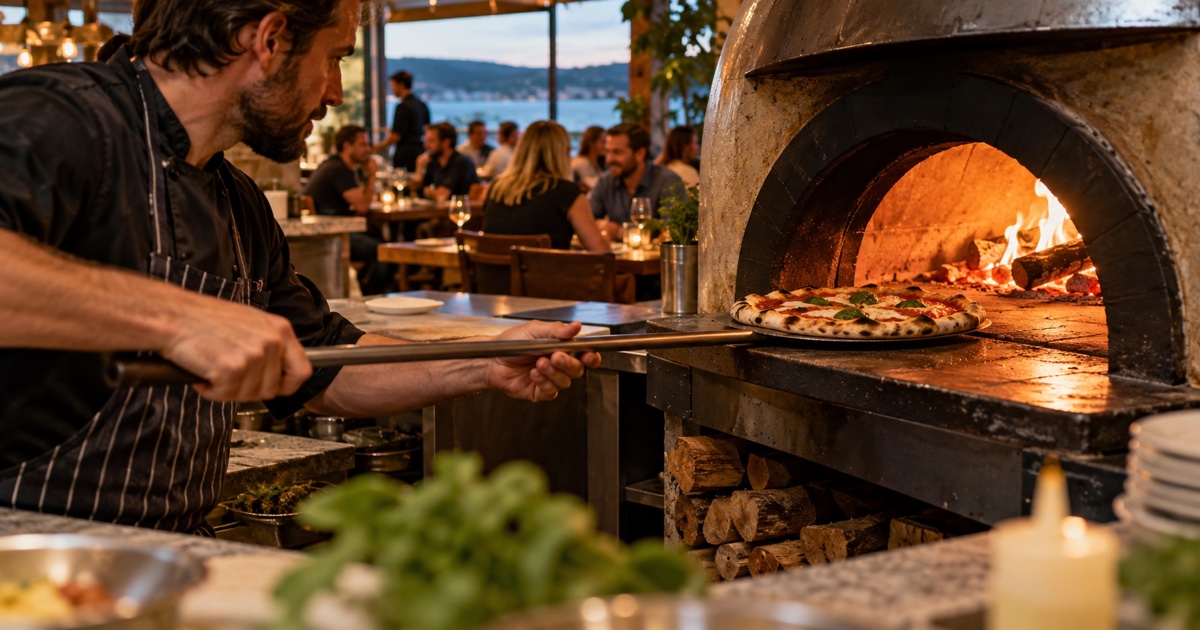
The oven floor, air and flame contribute heat in different ways. A pizza is placed where the base can cook while the top receives enough radiant heat. The pizza maker watches the edge, underside and toppings, then turns the pizza because the area nearest the flame can colour faster.
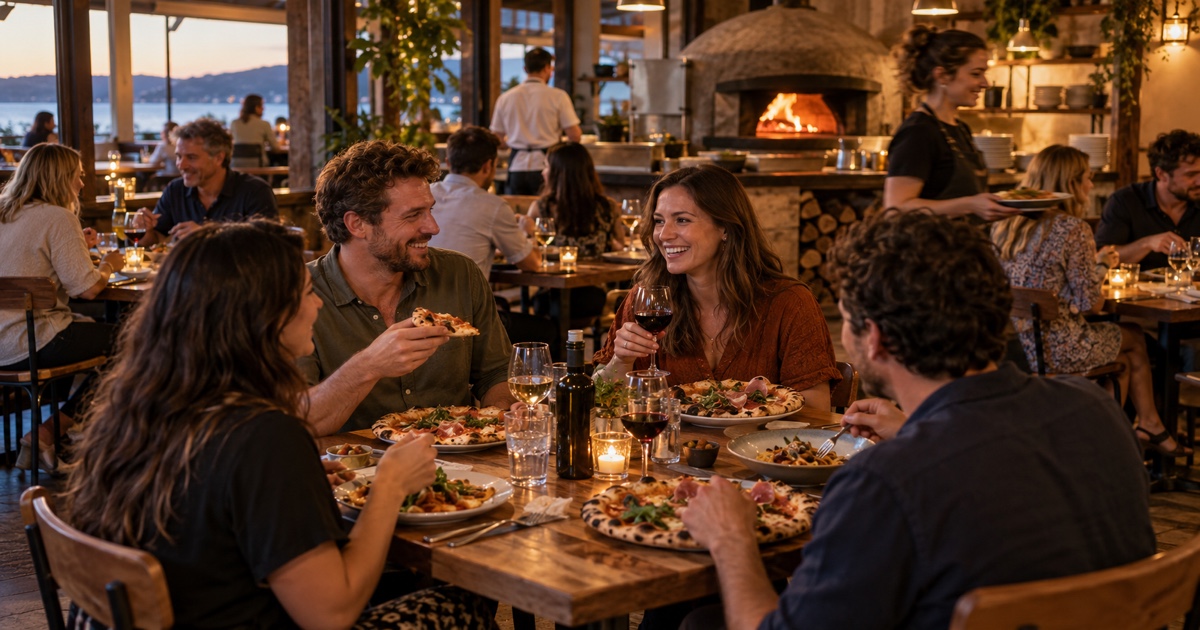
Baking is rapid, but capacity is physical. Each pizza occupies space and needs attention. A large order may be sequenced so every pizza receives an appropriate bake instead of crowding the oven. That is one reason a table may see dishes arrive in stages.
Natural variation is part of the process. A bubble can rise or one edge can colour more strongly. The aim is not factory uniformity; it is a consistent style with the crust cooked, toppings integrated and flavours balanced.
Finishing connects the oven to the plate
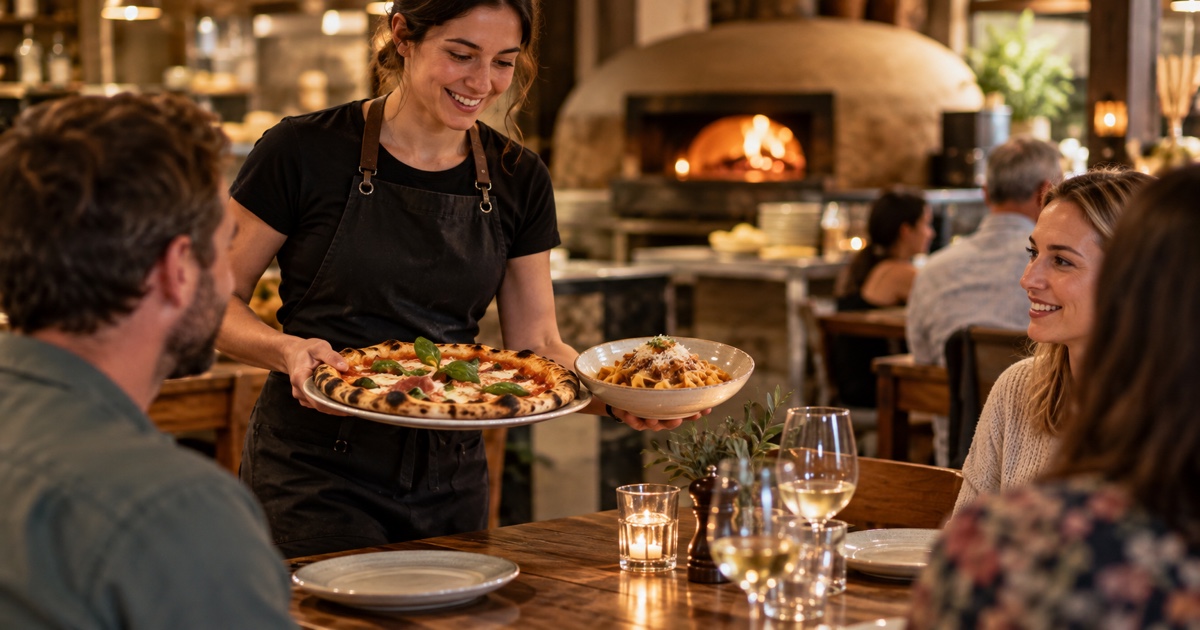
After baking, a pizza may receive herbs, oil or another finishing element according to the recipe. It is cut, checked and sent to the dining room or box. Those final seconds matter: careless cutting can drag toppings, while a long wait can change the crispness and temperature.
Dine-in gives the shortest path from oven to plate. Takeaway adds boxing, collection and travel. Steam trapped in a box gradually softens the base, so collection timing should be linked to when the group can eat. Ordering early and then leaving the pizza waiting is not the same as giving the kitchen useful notice.
For delivery, check the current service and expected timing in the official ordering system. Distance, weather and other orders affect the journey after the pizza leaves the restaurant. Choose dine-in, collection or delivery according to the result and convenience your group values.
A group table can work with progressive service
When pizzas arrive one after another, a group can share the first while it is hot. Tell the server that this is acceptable, or explain if individual diners need their own mains together. A clear service preference helps the restaurant pace the order.
Add a starter, pasta or salad only when it supports the meal. Different kitchen sections may complete dishes on different timelines. For a fixed event time, ask what menu plan is realistic instead of assuming every category can be synchronised to the minute.
Larger parties should use a reservation and provide an accurate number. The official booking page handles ordinary table reservations, while the Functions & Catering page is a better starting point for private spaces or structured events.
What diners can observe without entering the kitchen
Look at the pizza as a complete result. The rim should belong to the same bake as the centre, the toppings should remain identifiable and the slice should be enjoyable at the temperature served. A view of the oven can add interest, but it is not required to judge the food.
Service provides another clue. Clear menu explanations, accurate order checking and sensible pacing connect kitchen work with the table. If a pizza arrives later than expected, ask politely about the order rather than assuming the oven or staff failed. The response and resolution are part of the restaurant experience.
Notice how the restaurant handles a mixed order as well. Pizza, pasta and salads may come from different preparation sequences. A server who explains the expected flow helps the table decide whether to share the first dish or wait. That communication is part of the process, not an apology for handcrafted food.
Questions that match the process
- Does the current menu have a combination that fits the group?
- Which variations can be accommodated without compromising the dish?
- Will the table share pizzas as they arrive or wait for individual mains?
- Is the booking time realistic for the group’s arrival?
- For takeaway, can collection and eating happen close together?
- Are dietary questions confirmed with the restaurant rather than inferred?
- Does a large group need a function enquiry instead of a standard table?
Enjoy the process as part of the meal
A good pizza restaurant manages time long before the customer sees the oven. Dough preparation, organised toppings, controlled heat and clear service all shape the final slice. Diners get a better experience when their ordering and timing work with that process.
Plan a wood-fired meal at Venice Albany: browse the menu, reserve a table, or use the online ordering page for current takeaway options.
Frequently asked questions
Why might pizzas arrive at different times?
Wood-fired pizzas need individual placement, turning and finishing. Progressive service can keep each pizza closer to its best temperature.
Does fast baking mean the whole order is instant?
No. Dough and ingredient preparation happen earlier, and every order still needs assembly, oven space, checking and service.
Why can takeaway texture differ from dine-in?
Travel and steam inside the box can soften the base. Prompt collection and eating help preserve more of the intended texture.
Can every topping be added to any pizza?
Ask the restaurant. Extra ingredients can alter moisture, weight and baking, so some variations may not suit the designed result.