

This guide looks at topping relationships rather than ranking one combination as universally best. It uses the type of ingredients diners can see on Venice’s current menu while keeping availability subject to the restaurant’s latest information.
Begin with flavour roles, not a topping count
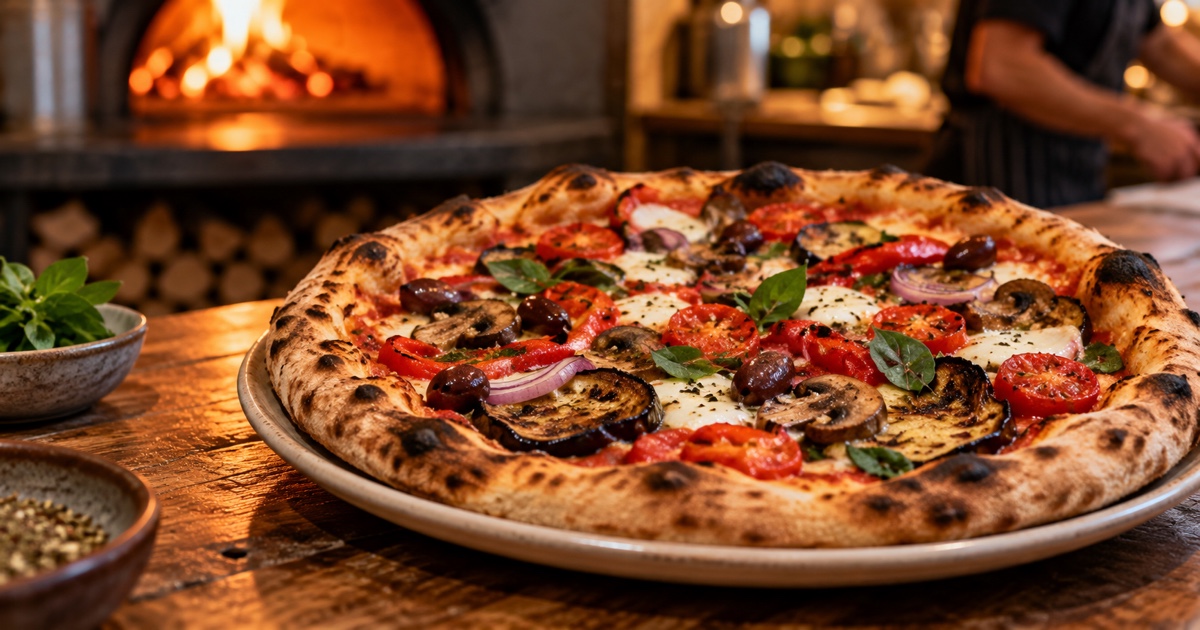
Sweetness can come from capsicum, onion or roasted vegetables. Olives bring salt and intensity. Mushrooms contribute earthy savoury notes. Tomato adds acidity and juiciness, while garlic provides aroma. Cheese connects the surface with richness and browning. A satisfying pizza uses these characteristics deliberately.
Venice’s Vegetarian pizza has been listed with mozzarella, capsicum, olives, onion, mushrooms, fresh tomato, eggplant and garlic. Read the current description before ordering, because recipes and availability may change. The combination illustrates how several vegetables can contribute different functions rather than tasting like a random pile.
More is not always better. If every topping is highly assertive, the diner loses the contrast that makes each one noticeable. A restrained amount of olive can sharpen sweeter vegetables. Garlic can lift mushrooms and eggplant without becoming the only aroma. Balance is a relationship, not a maximum.
Moisture determines whether the base stays coherent
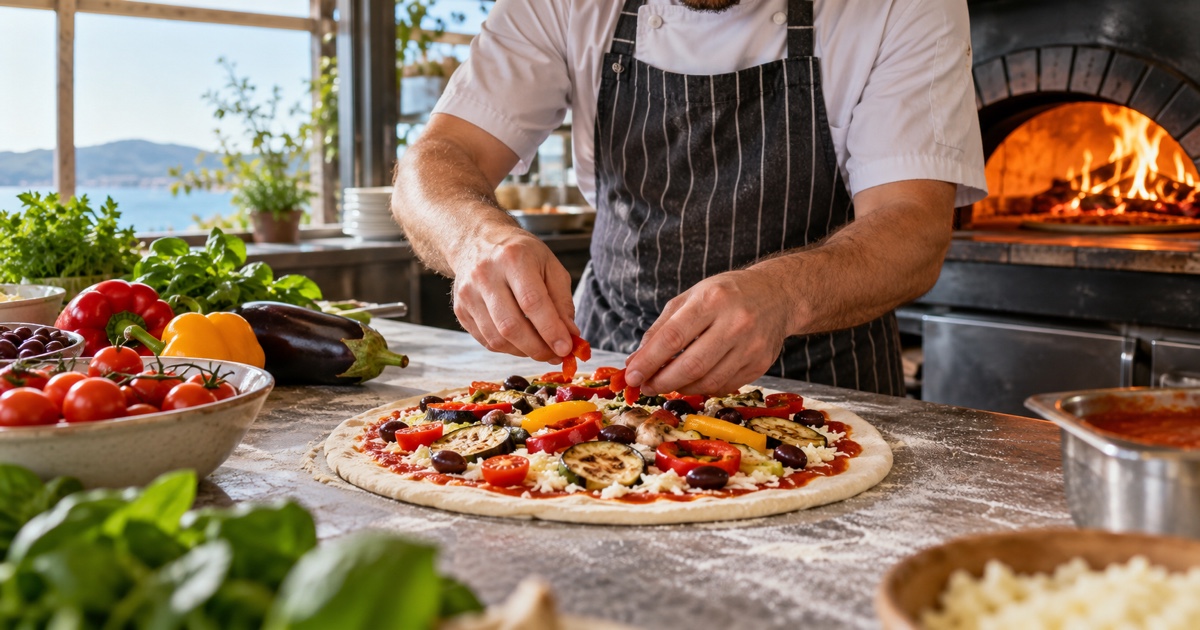
Mushrooms, fresh tomato, capsicum and eggplant all release water as they heat. Preparation, slicing and portioning influence where that moisture goes. A wood-fired oven cooks quickly, so the pizza maker must balance browning on top with enough structure underneath.
Diners can support that balance by avoiding excessive additions. Requesting several extra wet toppings may change the result more than expected. If you want a modification, ask how it affects the pizza rather than assuming every vegetable can be doubled without consequence.
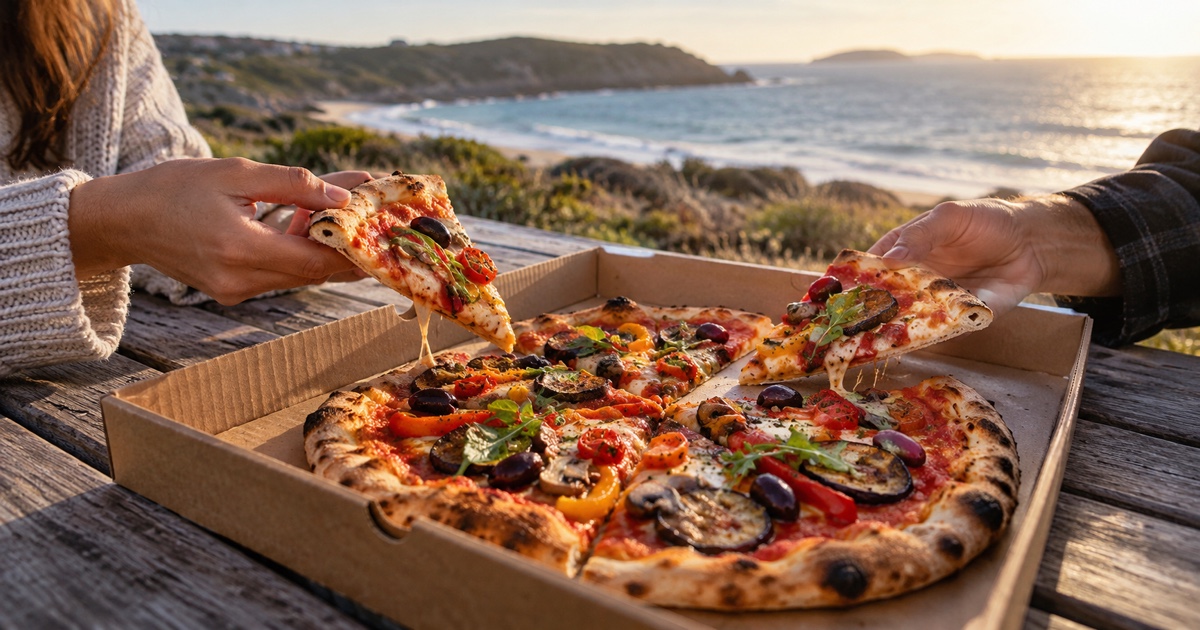
Serving time matters too. A pizza may leave the oven with a firm base and then soften as steam collects in a takeaway box. Dine-in and takeaway are both valid choices, but they create different texture conditions. For collection, travel directly to the eating place and have the table ready.
Texture keeps a vegetable-led pizza lively
A soft vegetable such as roasted eggplant benefits from contrast with a firmer capsicum edge, a browned crust or the slight chew of mushroom. Onion can soften and sweeten while still retaining definition. Fresh finishing ingredients, when part of a recipe, can add another layer after the heat of the oven.
Cut size affects the bite. Large pieces can pull away from the slice; pieces that are too small can disappear into cheese and sauce. Even distribution gives each slice a representative mix without requiring every bite to contain every ingredient.
The crust remains part of the texture design. Taste it with and without toppings. A good vegetarian pizza should not need vegetables across every millimetre to be enjoyable. Dough, sauce and cheese form the structure that lets the toppings speak clearly.
Four pairing styles to consider
Sweet and salty
Capsicum or onion can be balanced by olives and cheese. This style suits diners who enjoy clear contrast without relying on chilli.
Earthy and aromatic
Mushroom and eggplant work with garlic to create deeper savoury flavour. Portioning matters because these ingredients can also add moisture and softness.
Fresh and rich
Tomato’s acidity can cut through melted cheese. A salad or vegetable side can extend the contrast across the wider meal.
Gentle and bold
A familiar cheese-and-tomato foundation can carry one or two stronger toppings. This may suit a mixed group that wants a vegetarian option without an overly complicated profile.
Order a vegetarian pizza as part of the whole table
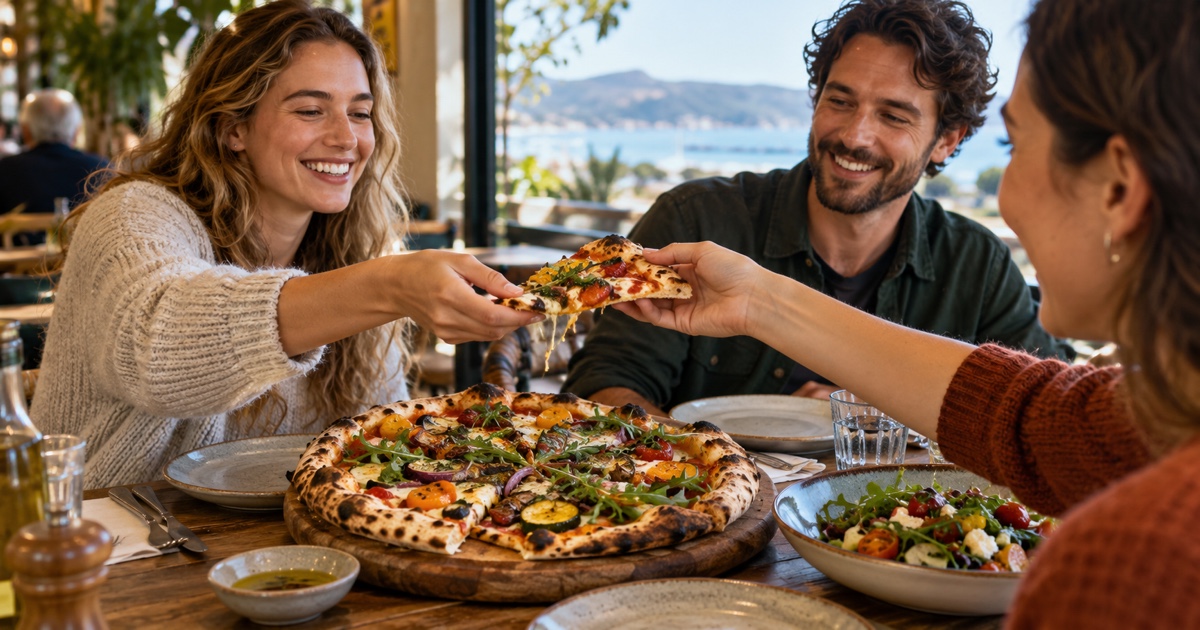
Do not assume the vegetarian pizza belongs only to the vegetarian diner. It can provide contrast beside a meat or seafood pizza and help a group taste different combinations. At the same time, reserve enough for the person who depends on it rather than letting the table treat it as an optional sample.
“Vegetarian” does not answer every dietary question. Cheese may matter to a vegan diner; gluten matters to someone avoiding wheat; cross-contact may matter for allergies. State each requirement separately and ask the restaurant about the exact dish.
If the group is ordering online, add variations only through options the system supports and review the final cart. For a change that needs explanation, contact the restaurant before submission. The official ordering page is the best place to check current choices and prices.
Keep the texture in a takeaway meal
Choose a collection time close to when everyone can eat. Keep the box level in the vehicle and avoid placing cold drinks directly on top. At home, move slices to plates or a board promptly so steam does not remain trapped longer than necessary.
If there are leftovers, follow appropriate food storage guidance and reheat only what will be eaten. A home oven or pan may restore some firmness more effectively than leaving a slice in a closed container, although the result will not exactly reproduce the restaurant oven.
Pair the pizza with a side that has a different job
A vegetarian pizza can already contain several vegetables, so a side does not need to repeat every topping. A crisp salad can add freshness and acidity, while a simple bread may be unnecessary when the group has ordered several pizzas. Read the whole table before adding another plate.
For two diners, one pizza and a complementary dish may create more variety than two heavily topped pizzas. For a larger group, the vegetarian pizza can sit beside contrasting meat or seafood choices. Ask how many dishes suit the actual party rather than treating this as a fixed formula.
A topping-balance checklist
- Choose vegetables that contribute different flavour roles.
- Balance sweet ingredients with salt, acidity or savoury depth.
- Consider the combined moisture of fresh vegetables.
- Keep enough textural contrast across toppings and crust.
- Ask before adding several extra ingredients.
- Confirm dietary needs beyond the word vegetarian.
- Plan takeaway timing so the pizza is eaten promptly.
Let vegetables create the identity
A strong vegetarian pizza does not apologise for the absence of meat. It uses vegetables, cheese, sauce and crust to build sweetness, salt, savoury depth and texture. Choosing by those qualities is more useful than counting toppings.
Explore vegetarian options in Albany: check the current Venice menu, book a table, or order online after confirming any dietary requirements.
Frequently asked questions
Is vegetarian pizza automatically vegan?
No. Cheese and other ingredients may not be vegan. Ask about the exact pizza and available modifications.
Why can vegetable pizza become soft in the centre?
Several vegetables release moisture, and steam can collect during takeaway. Ingredient preparation, quantity, baking and travel time all affect texture.
Can meat eaters enjoy a vegetarian pizza?
Of course. It can add a different flavour profile to a shared order. Just make sure diners relying on the vegetarian option receive enough.
Should I add every available vegetable?
Not necessarily. A focused combination often gives clearer flavour and better moisture balance than the largest possible topping list.