

Learning a few relationships makes it easier to choose without treating one pairing as a strict law. This guide uses examples found on Venice Albany’s menu and explains what to notice when comparing creamy, tomato-based, mushroom and seafood pasta.
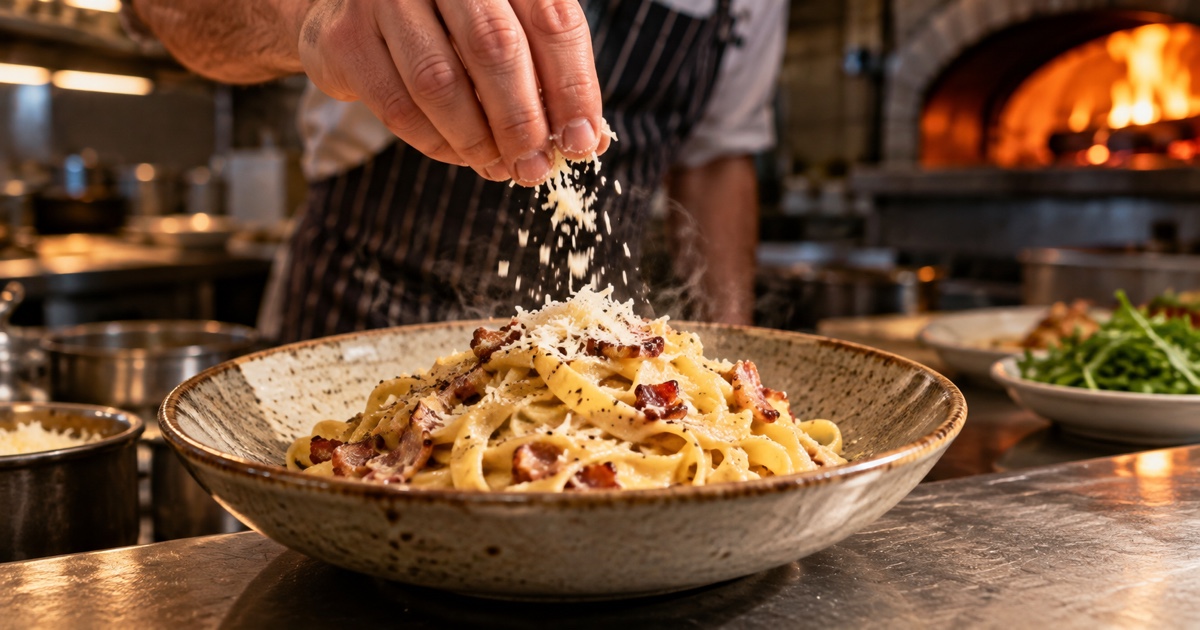
Long pasta creates a continuous coating
Spaghetti, linguine and fettuccine carry sauce along their length. A smooth or emulsified sauce can coat the strands, while small ingredients become caught between them. The diner experiences pasta and sauce together with each forkful rather than finding the sauce only inside a shape.
Fettuccine’s broader ribbon can support a creamy sauce. Venice lists fettuccine carbonara among its pasta choices, subject to the current menu. The width gives the sauce surface to cling to, while the diner still needs to turn a manageable amount onto the fork.
Spaghetti works naturally with a finely distributed meat sauce such as bolognese. The aim is not an enormous pool of sauce under bare noodles. A balanced dish brings the strands, sauce and grated finishing elements into one forkful.
Linguine can pair well with seafood because its length supports a sauce while leaving prawns or other pieces visually distinct. The Venice menu has included linguine with chilli prawns. Diners should read the current description for heat, sauce and ingredients rather than assuming every prawn pasta is alike.
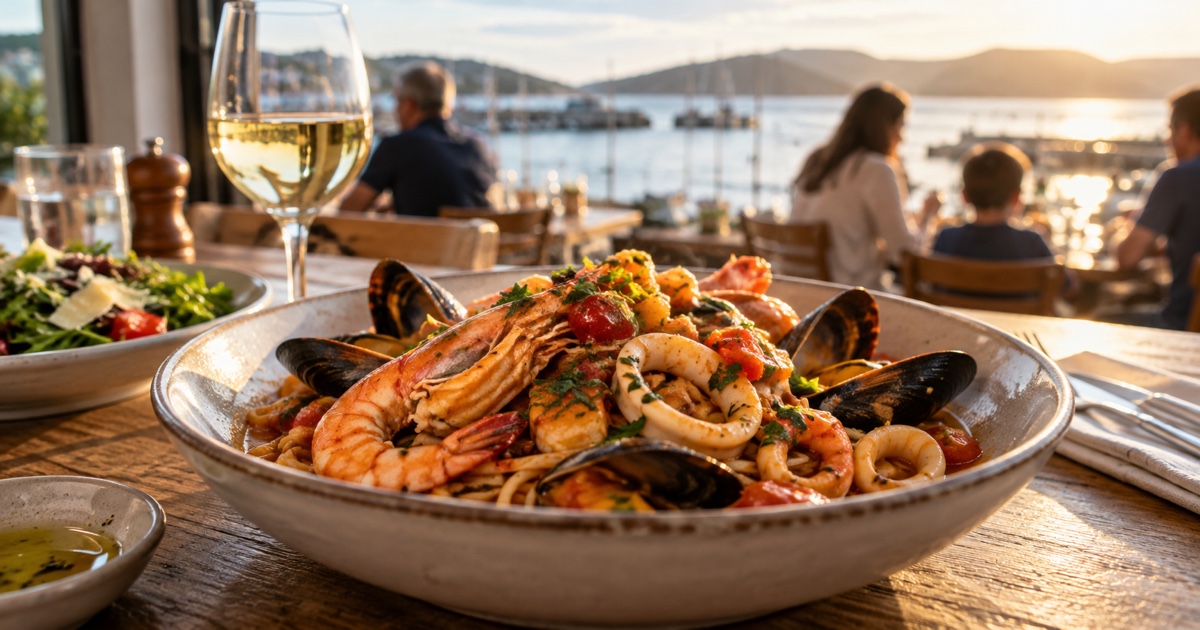
Short pasta and shells catch pieces differently
Tubes such as penne can hold sauce inside while ridges or surfaces carry it outside. This makes them useful with sauces containing small pieces of mushroom, meat or vegetables. Penne boscaiola, for example, brings a short shape into a sauce style associated with mushrooms and richness.
Shell shapes create pockets. Conchiglie can collect sauce and small ingredients, producing bites with changing concentration. That variation can be enjoyable, but the dish still needs enough sauce to coat the outside without drowning the shells.
Short pasta is often easier to share than long strands, although sharing is a table choice rather than a rule. Use a serving spoon and take a modest portion. Avoid repeatedly transferring sauce between plates when a diner has a dietary requirement.
Filled pasta makes the interior part of the sauce decision
Agnolotti, tortellini and other filled shapes contain their own flavour and texture. The sauce should support the filling rather than obscure it. A very strong sauce may dominate a delicate filling; a restrained sauce can let the interior remain recognisable.
Read both parts of the menu description. “Beef tortellini” tells you the filling but not the complete dish. Look for the sauce, garnish and any other ingredients, then ask if the wording is unclear. Filled pasta can be substantial even when the pieces look compact.
When comparing value, consider the complete preparation and eating experience rather than counting pasta pieces. Handmade or filled pasta involves a different structure from a large bowl of plain shapes. Appetite and preference should guide the choice.
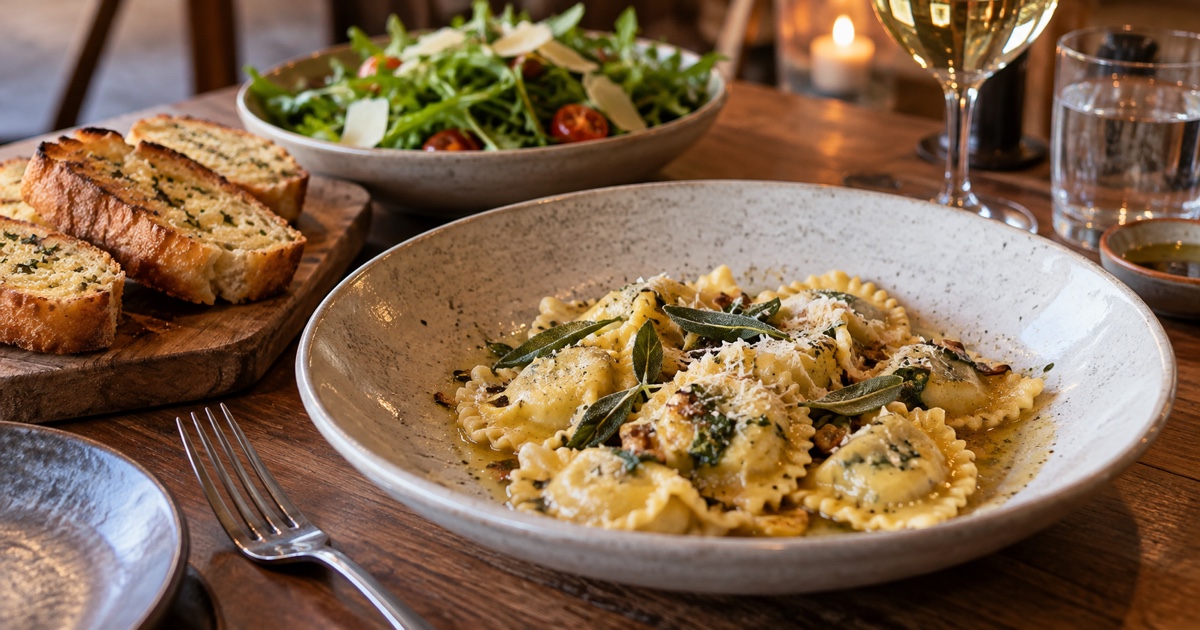
Seafood pasta depends on timing and sauce balance
Seafood changes quickly with heat. The kitchen coordinates pasta doneness, sauce and seafood so the elements finish together. A diner who asks for a major change should understand that it may alter more than one ingredient.
Tomato, garlic, chilli and seafood can form a bright, aromatic profile. Cream can create a richer one. Neither is automatically superior. Decide whether you want acidity, heat, richness or a cleaner seafood emphasis, then choose from the current menu.
Venice lists seafood across pasta and the wider menu, including marinara and chilli prawn examples. Ask about the exact seafood used if it matters to your preference or allergy. “Seafood” is a category, not a complete ingredient list.
What does texture contribute?
Pasta should provide structure against the sauce rather than dissolve into it. The ideal firmness depends on the shape and dish, but texture is part of the design. Long pasta should separate enough to turn; shells and tubes should retain their form; filled pasta should hold the filling.
Eat a few bites before adding extra seasoning. Cheese, cured ingredients, olives or seafood may already contribute salt. Chilli can build across the dish. Tasting first lets you respond to the actual plate rather than to a habit.
For takeaway, remember that pasta continues to sit in hot sauce during the journey. Choose a collection time close to eating and ask which dishes travel well if distance is significant.
How to order for a mixed table
Ask each diner to choose by sauce style and main ingredients before focusing on the shape name. One may want creamy carbonara, another tomato-based bolognese and another seafood with chilli. Those descriptions make differences clearer.
If sharing, select dishes with contrast and request appropriate plates. Pasta can be combined with pizza, salad or a starter, but avoid ordering so much starch that each dish competes for attention. The current Venice menu lets the group see the wider set of choices.
Use a sauce map when names feel unfamiliar
| Sauce direction | What to notice | Useful question |
|---|---|---|
| Tomato and ragù | Acidity, meat or vegetable pieces and herb character | Is the sauce slow-cooked, spicy or seafood-based? |
| Creamy | Richness, cheese, egg, mushroom or cured ingredients | Which ingredients provide the sauce’s main flavour? |
| Seafood | Species, shellfish, chilli and tomato or cream base | What seafood is included today? |
| Filled pasta | Interior filling plus the supporting sauce | What is inside the pasta and how is it finished? |
The map does not replace the written menu. It gives a diner a way to translate a dish name into flavour, texture and questions. Once those are clear, the exact shape becomes an enjoyable detail rather than a barrier.
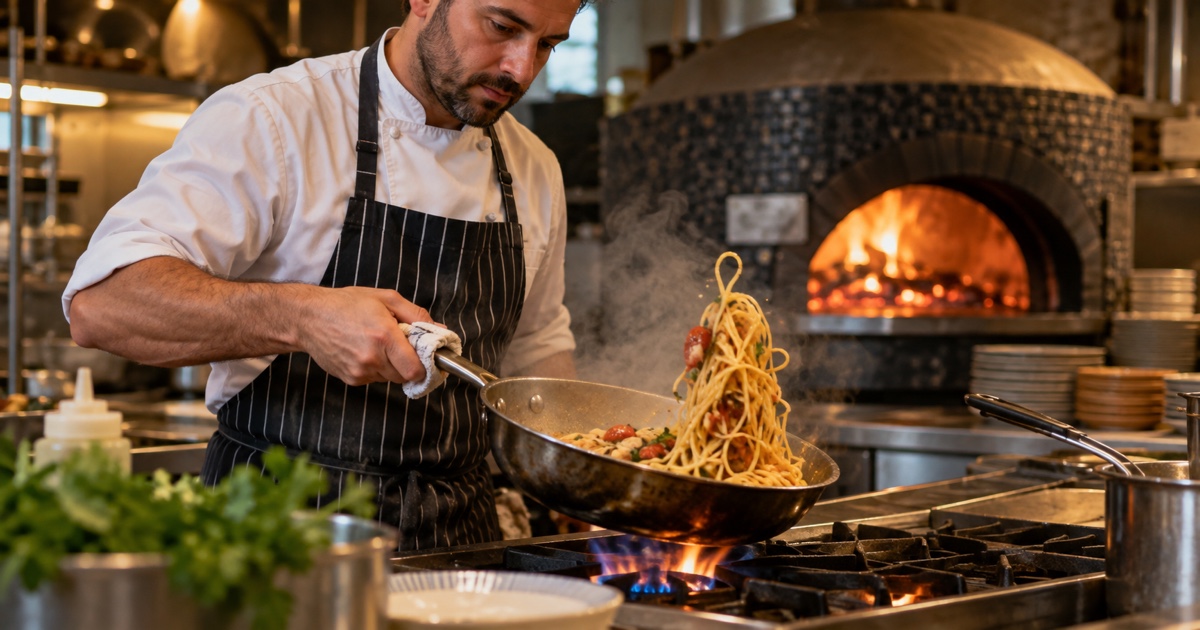
A pasta menu reading checklist
- Identify whether the shape is long, short, shell-like or filled.
- Find the sauce style and level of richness.
- Note the main protein, vegetables and aromatic ingredients.
- Ask what “seafood” or another broad label includes.
- Confirm heat and dietary questions before ordering.
- Decide whether the dish is individual or shared.
- For takeaway, consider how long it will remain in hot sauce.
Choose the relationship, not just the name
At a pasta restaurant, the shape, sauce and ingredients work as a system. Long strands coat, tubes and shells catch, and filled pasta brings its own centre. Use those clues to choose the eating experience you want.
Explore pasta in Albany: review the Venice menu, reserve a table, or use online ordering for current takeaway choices.
Frequently asked questions
Is one pasta shape more authentic than another?
No single shape wins. Shapes suit different sauces, regional traditions and recipes. Judge the complete dish.
Why does sauce pair differently with shells and spaghetti?
Shells catch sauce in pockets, while spaghetti carries a coating along its strands. The resulting bites distribute sauce differently.
Is filled pasta always a small meal?
Not necessarily. Filling and sauce can make compact pieces substantial. Ask about the dish rather than judging only by piece count.
Can pasta be shared?
Yes, when the table agrees and has suitable serving utensils. Keep dietary arrangements clear and take modest first portions.