

This plan organises the meal around people and timing. It offers a different focus from a general list of family-friendly features: a practical sequence for one multi-generation booking in Albany.
Choose a time the youngest and oldest diners can enjoy
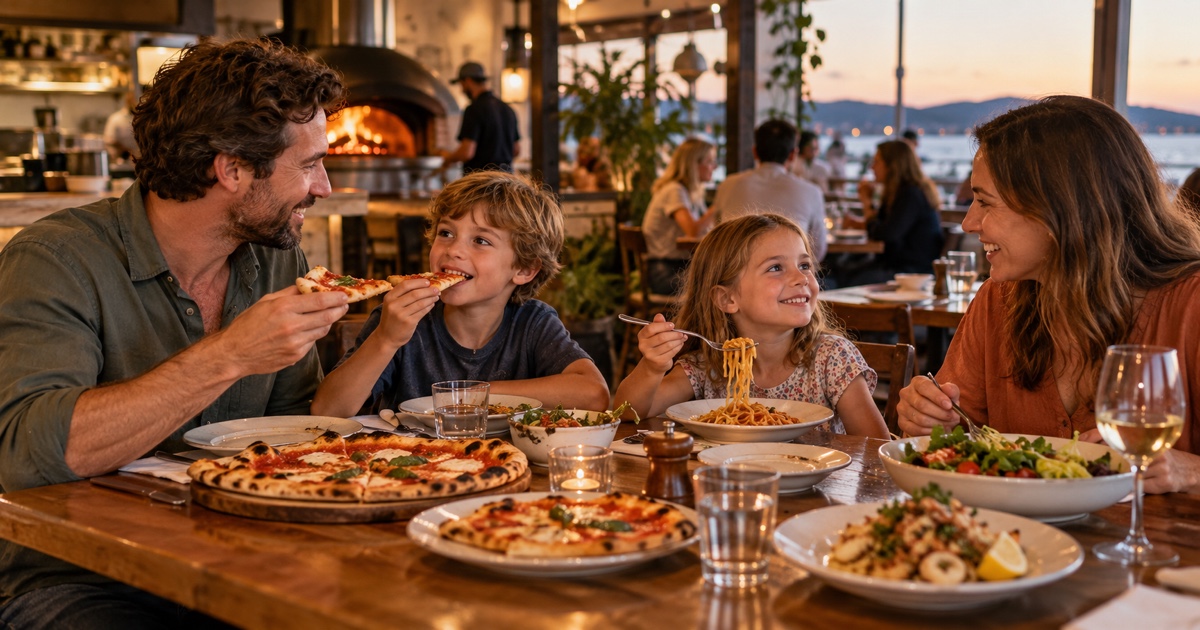
Begin with children’s usual meal time and the practical travel needs of older relatives. An earlier booking can reduce the chance that hunger turns the first menu decision into a crisis. It may also give the family more time to settle before a child’s bedtime.
Do not create an arrival time that only the organiser can meet. Account for work, school activities, parking and mobility. Tell the restaurant if the group has a fixed finish, but allow enough time for ordering, cooking and conversation.
Use the official Venice booking page for the table. If the family needs a highchair, step-free route, space for a mobility aid or another practical arrangement, contact the restaurant directly and confirm what is available.
Think about the table before deciding who sits where
Seat a parent or carer where they can help a young child without blocking service. Give older relatives a position that is comfortable to enter and leave. If hearing is a consideration, describe the need when booking rather than assuming a photograph reveals the quietest table.
Keep prams, bags and mobility equipment out of pathways while retaining access for the person who needs them. Ask staff where items can be placed safely. A family table feels calmer when the floor and serving area are not crowded.
Place shared food within reach of adults who can serve it. Hot plates and pizza boards should not need to pass directly over a child. Children can participate by choosing a dish or receiving a slice on their plate without managing the communal serving area.
Build the menu in three layers
Layer one: reliable choices
Check the current kids menu and identify choices that younger diners understand. A familiar meal can give children confidence while adults explore a wider menu. Do not assume every child wants the same food or portion.
Layer two: shared family dishes
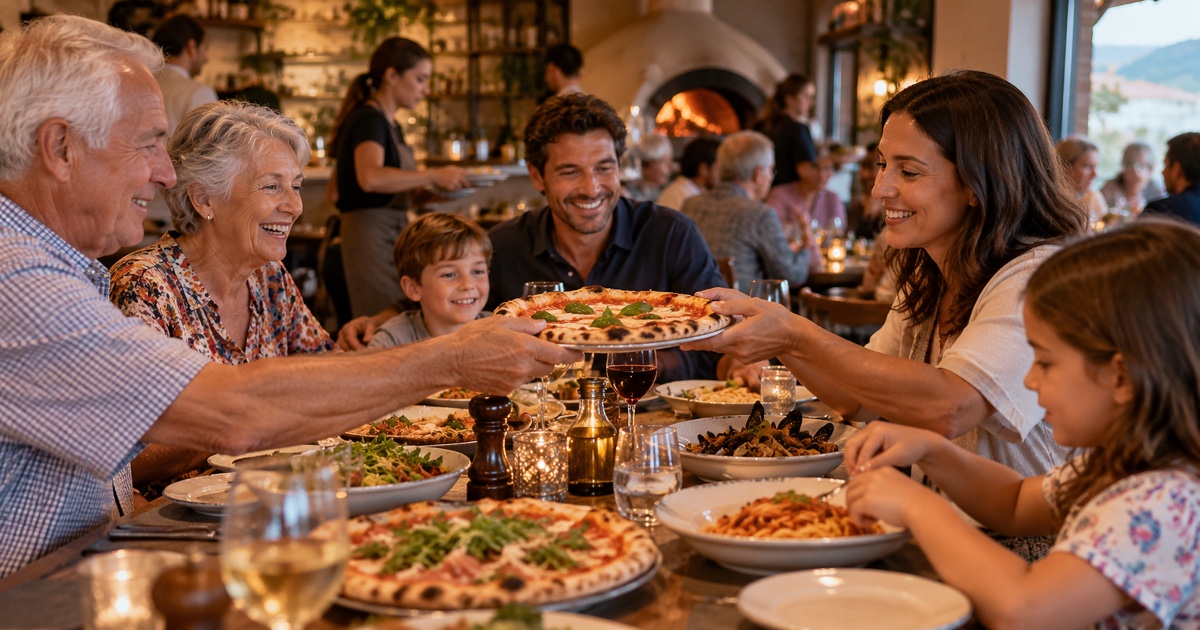
Pizza is easy to share when toppings suit the group. Choose distinct combinations rather than several crowded versions of the same flavour. A pasta or salad can add another texture, and smaller first servings let everyone decide what they enjoy.
Layer three: individual needs
Grandparents and adults may prefer their own pasta, seafood or main. The Venice menu includes wood-fired pizza, pasta and risotto, seafood, meat and poultry, salads, sides, children’s food and drinks. Use that breadth to accommodate preferences without forcing every dish into the centre.
Collect dietary requirements before the visit. A child’s allergy, an adult’s intolerance and a vegetarian preference need separate, accurate communication. Ask about the particular dish and preparation rather than relying on a group member’s memory of a previous meal.
Let different diners eat at a comfortable pace
Tell the server if children’s meals should arrive as soon as practical or with the adults. Families differ: one child becomes restless while waiting, while another wants everyone to begin together. A clear request is better than expecting staff to infer the routine.
Allow hot food to cool to a comfortable temperature for children and anyone sensitive to heat. Adults can divide slices and pasta before the table becomes crowded. Keep drinks and hot dishes away from edges.
Conversation may continue after a child has finished. Bring a quiet, table-appropriate activity if helpful, but avoid sound that affects nearby diners. The aim is not perfect stillness; it is a considerate environment where the family and surrounding tables can enjoy dinner.
Use sharing to connect generations, not pressure them
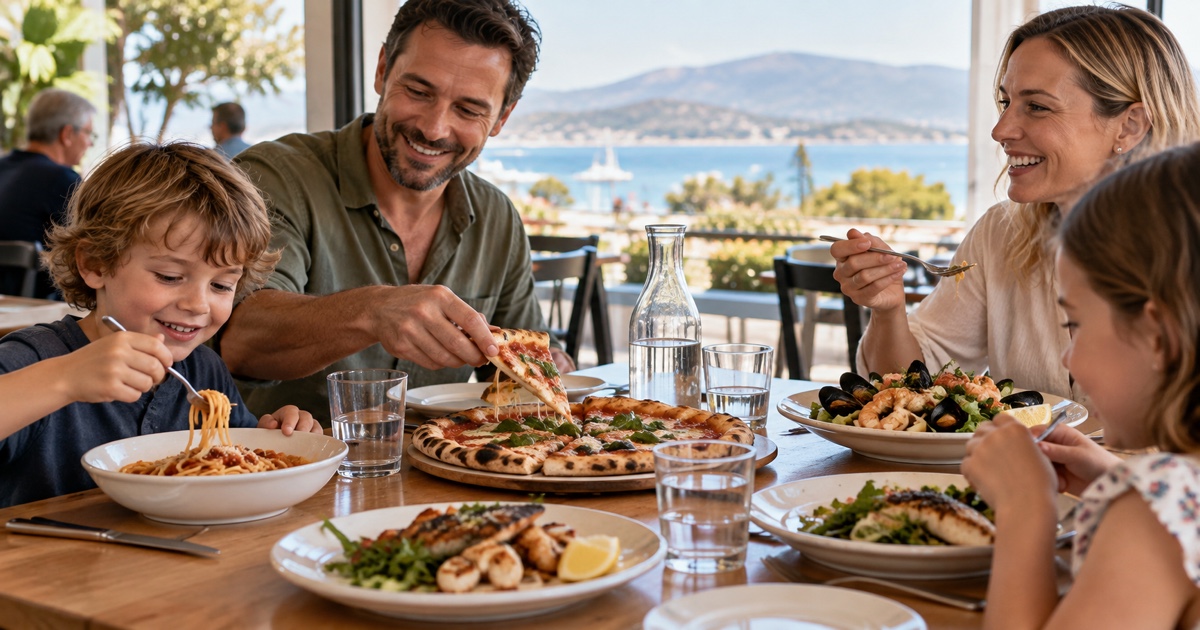
A grandparent can offer a taste of pasta, and a child can share a pizza slice, but nobody needs to sample everything. Ask before adding food to another person’s plate. Keep confirmed dietary items separate and use their designated utensils.
Storytelling can be part of the meal. A simple question about a favourite pizza topping or family recipe invites different generations into the conversation without making children perform. Leave enough time for that connection rather than treating the restaurant as a refuelling stop.
If the group is celebrating, explain any cake, speech or decoration plan before arrival. For a larger event or private space, use the Functions & Catering page instead of assuming a standard reservation includes event services.
Make payment and departure part of the plan
Agree who is paying before the bill arrives. If households will contribute separately, ask which split options the restaurant supports. One adult can settle the account while another helps children and grandparents prepare to leave.
Check the table and floor for glasses, hearing devices, toys, jackets and mobility items. Package suitable leftovers promptly and follow food-safety guidance. A calm departure protects the positive final memory of the evening.
Adapt the plan to the family’s purpose
For a quick school-night dinner, keep choices focused and payment simple. For a birthday, allow time for greetings and confirm cake or decoration arrangements. For visiting grandparents, build the evening around comfortable travel and conversation rather than trying to include several Albany activities before the meal.
The restaurant does not need the family’s entire story, but it does need operational facts. Send the final headcount, practical seating needs and any fixed timing. Keep personal details within the family unless they are necessary for the requested arrangement.
A family dinner checklist
- Booking time suits children and older relatives.
- Travel and parking time are realistic.
- Highchair, access or seating needs are confirmed.
- Children have clear current menu choices.
- Adults and grandparents can order individually if preferred.
- Dietary requirements are accurate and linked to dishes.
- The table knows whether food will be shared.
- Payment and departure roles are agreed.
Plan for people, then enjoy the food
A successful family restaurant meal does not require every generation to eat the same thing at the same speed. Choose a realistic time, arrange a comfortable table and build the menu in layers. The result can feel connected without becoming rigid.
Organise your Albany family dinner: review the Venice menu, reserve a table and use the contact page for practical requirements that need confirmation.
Frequently asked questions
What time is best for a family dinner?
The best time is one the youngest and oldest diners can reach and enjoy. Consider usual meal times, travel and any fixed bedtime or departure.
Should children share the adults’ food?
They can, but do not rely on it. Check the kids menu and give each child a clear suitable option.
Can grandparents order separately?
Yes. A family meal remains social even when some diners have individual mains and others share pizza.
How do I request accessible seating?
Describe the practical need directly to the restaurant and ask what can be provided for the booking date.