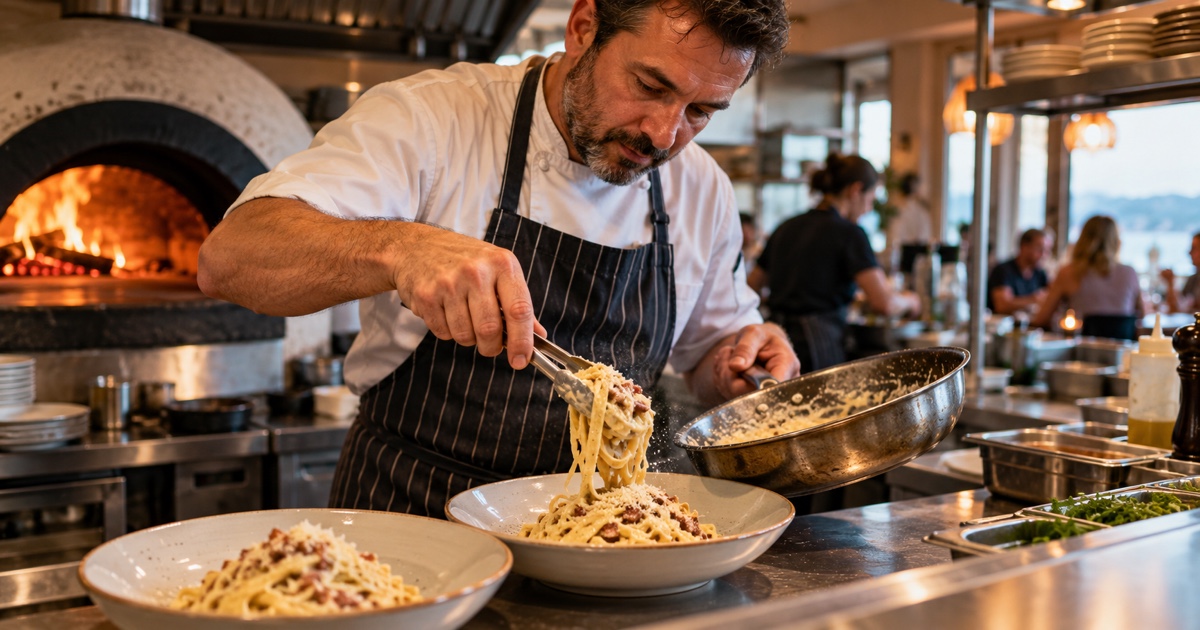
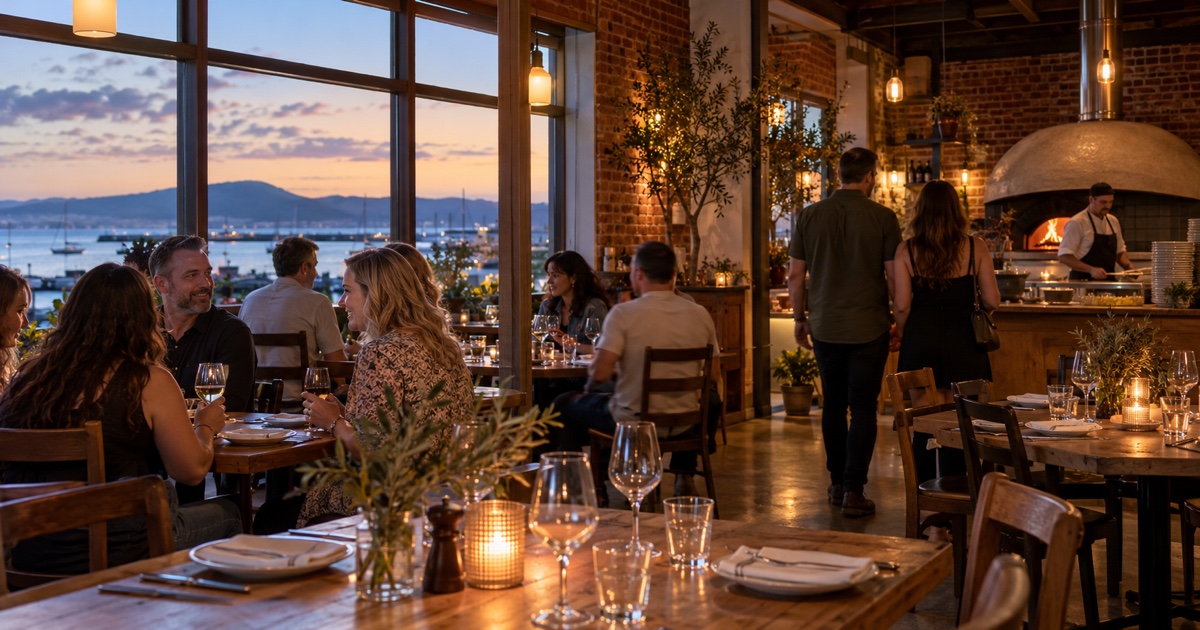
Understanding that chain gives you a better way to read a menu and judge the pizza in front of you. It also creates a distinct question from simply choosing a local restaurant. Instead of declaring one universal winner, this guide explains the craft features that different diners may value.
Dough is a process, not just a list of ingredients
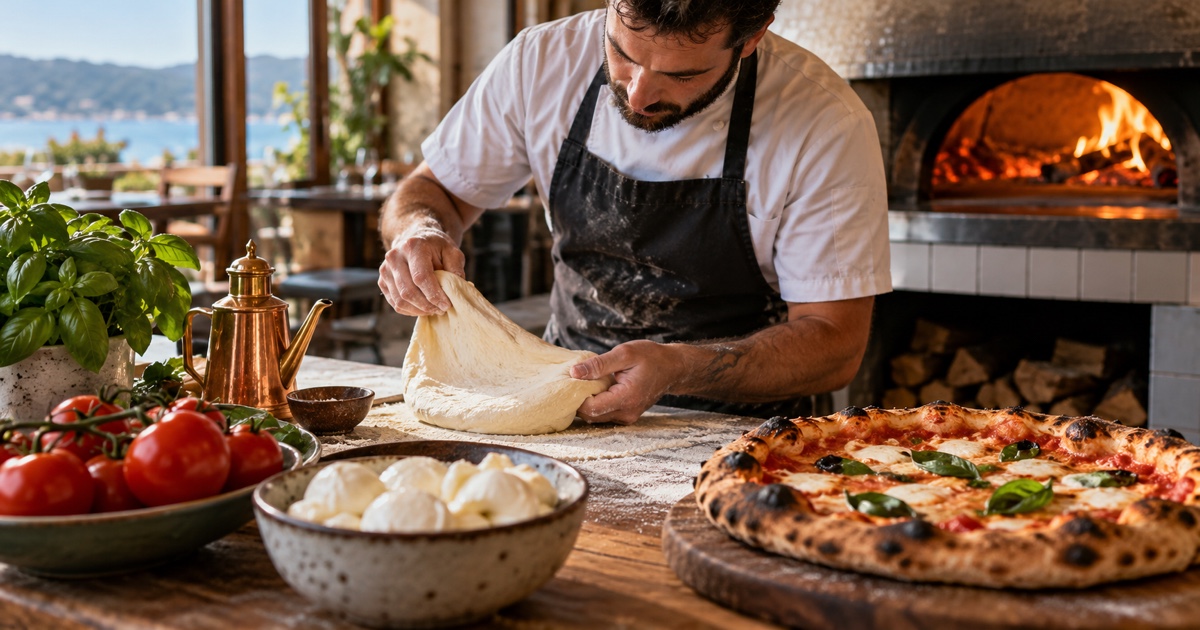
Pizza dough may begin with a small set of familiar ingredients, yet time and handling change how they behave. Hydration affects softness and extensibility. Fermentation develops gas and flavour. Temperature influences the pace. The person shaping the base then needs to preserve enough of that structure to create a satisfying rim without leaving an uneven centre.
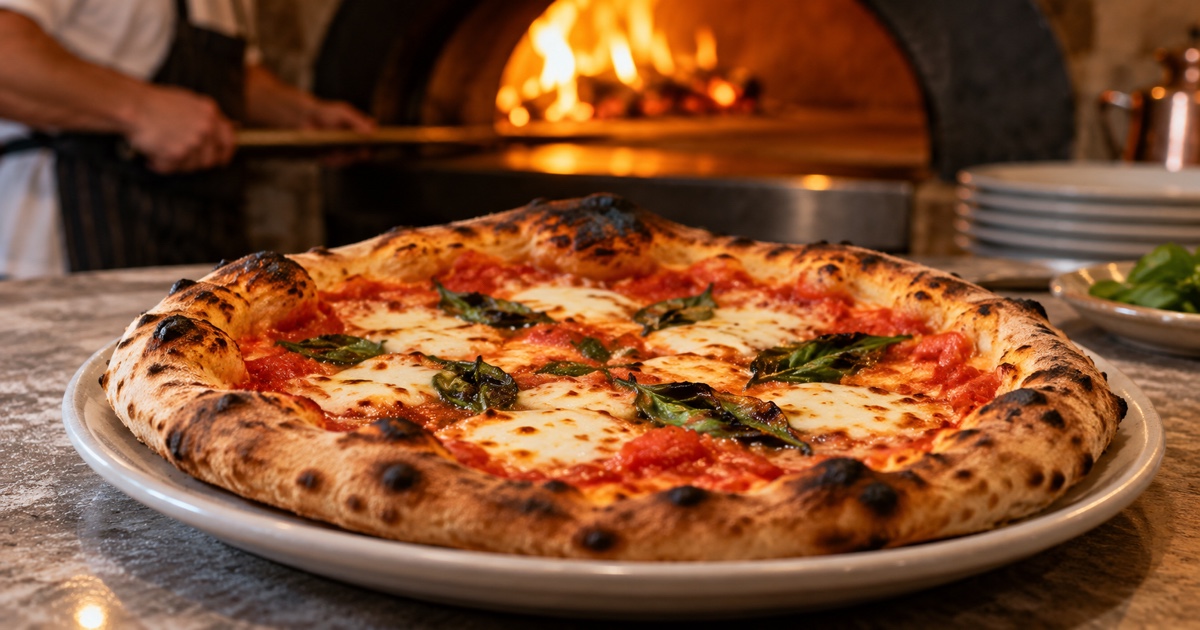
A good crust is not defined by one texture for every style. Wood-fired pizza can combine a tender interior with charred spots and a base firm enough to lift a slice. Some diners prefer a softer fold; others want more crispness. Judge the result against the style being offered rather than expecting every pizza to resemble a packaged or pan-baked version.
Appearance gives clues but not a complete answer. An exaggerated ring is not automatically better, and dark spots are not automatically burnt. Taste the crust as part of the pizza. It should support the sauce and toppings, not function only as an edible handle left on the plate.
High heat changes the baking equation
A wood-fired oven exposes the pizza to intense heat from the floor, hot air and flame. Baking can happen rapidly, which makes preparation and turning important. The base needs contact with the hot surface while the top cooks from radiant heat. A pizza maker watches colour and movement rather than relying only on a household-style timer.
That environment creates variation. One side may colour faster and require a turn. A bubble can rise at the edge. Cheese and vegetables release moisture at different rates. Skilled baking manages these changes so the crust develops while the centre remains coherent.
Speed in the oven does not mean an unlimited number of pizzas can appear at once. Each base must be assembled, placed, watched, turned and finished. For a group, progressive service can protect quality better than holding the first pizzas until the final one is ready. Ask how the restaurant recommends sharing the order.
Topping balance is partly moisture management
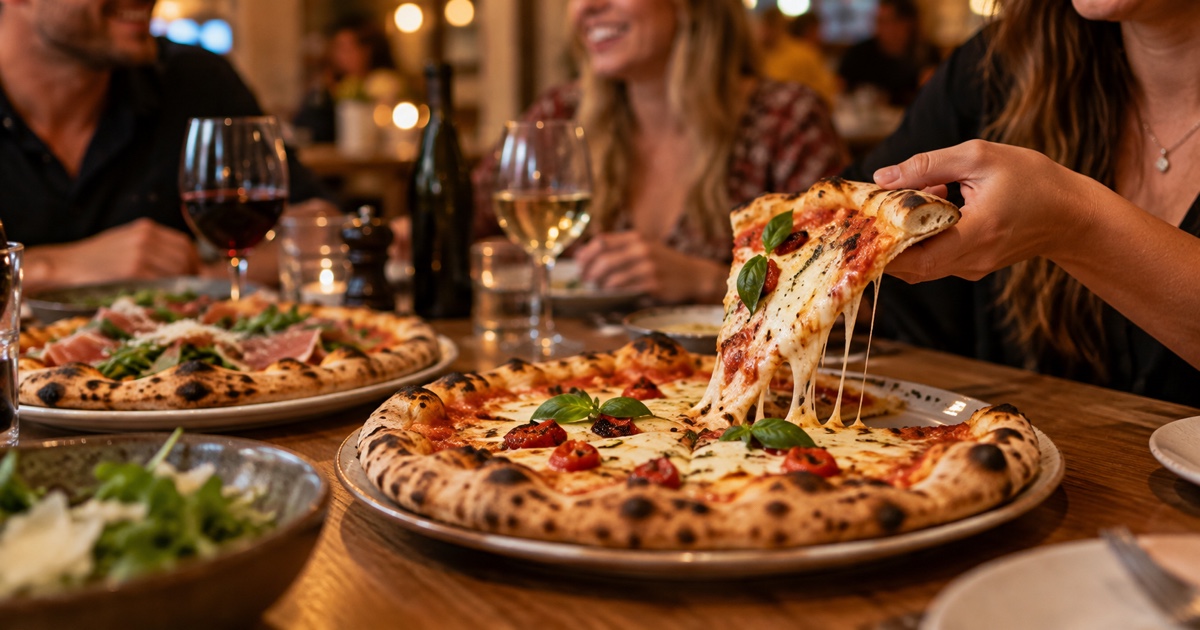
More toppings do not automatically create more flavour. Fresh tomato, mushrooms, capsicum, seafood and some cheeses contribute moisture as they cook. If every ingredient is piled heavily in the centre, the base may struggle to set. Distribution and proportion matter as much as the number of items in the menu description.
Salt, acidity, richness and aroma also need relationships. Olives or cured meat can bring salt; tomato can provide acidity; cheese adds fat and savoury depth; garlic and herbs lift the aroma. A vegetable-led pizza can feel complete when those elements are deliberate. Meat is not the only source of complexity.
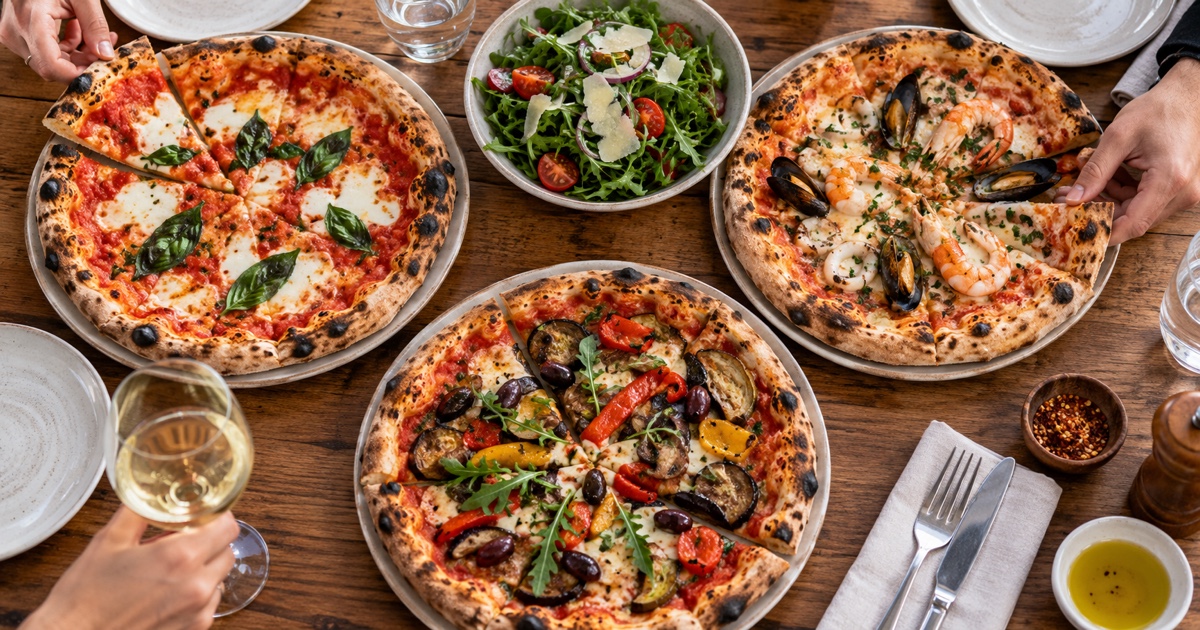
Venice’s pizza menu lets diners compare combinations such as the Venice Special, Aussie, Marinara, American, Vegetarian and Hawaiian. Read the current descriptions and choose the profile you want. A diner who prefers clean, distinct toppings may make a different choice from someone seeking a rich, fully loaded pizza.
Sauce and cheese should connect the slice
Sauce provides flavour and moisture, but it should not erase the dough. A restrained, evenly spread layer lets heat reach the base and gives toppings somewhere to sit. Too little can feel dry; too much can cause the centre to slide. The ideal amount depends on the dough, oven and ingredients above it.
Cheese behaves differently according to variety, moisture and placement. Even melting helps bind the surface, while excessive coverage can insulate wet ingredients. Look for a slice in which crust, sauce, cheese and toppings remain connected when lifted, accepting that a very hot first slice may naturally be more flexible.
Fresh finishing ingredients can add contrast after the oven. Their role is different from ingredients that need roasting. A complete pizza uses heat selectively rather than treating every topping in exactly the same way.
Assess the whole pizza, not one photogenic edge
Begin with aroma and the first bite near the edge of the topped area. Notice whether the base supports the slice, the sauce is proportionate and the toppings remain identifiable. Then taste the crust by itself. This simple sequence reveals more than measuring the largest bubble.
Consider temperature and timing. Pizza eaten at the table moments after baking has a different texture from pizza carried across Albany in a closed box. Takeaway can still be enjoyable, but condensation and travel time affect crispness. Compare like with like when deciding what “best” means to you.
Consistency matters across the pizza. One excellent slice and a wet centre suggest a different result from a pizza that remains balanced around the whole base. At the same time, handmade food carries natural variation. The goal is controlled character, not machine-perfect repetition.
A practical quality checklist
- The crust suits the stated style and is enjoyable to eat on its own.
- The base holds the toppings without becoming rigid or collapsing immediately.
- Sauce, cheese and toppings remain in proportion.
- High-moisture ingredients are distributed thoughtfully.
- Salt, acidity, richness and aroma are balanced for the chosen combination.
- The pizza is served or collected at a time that protects its intended texture.
- Your judgement accounts for personal preference rather than pretending taste is universal.
Secondary searches such as wood-fired pizza quality, pizza dough fermentation and crispy pizza crust point to parts of the same system. No single feature can rescue a pizza when the rest of the system is out of balance.
Choose the craft qualities you actually enjoy
The best pizza near me is not proven by a single topping count or photograph. It is the pizza whose dough, heat, sauce and toppings come together in a style you enjoy, at the time and place you intend to eat it.
Taste the result in Albany. Review Venice’s wood-fired pizza menu, book a table for dine-in, or order online when takeaway suits the evening.
Frequently asked questions
Are dark spots on a wood-fired crust burnt?
Not necessarily. Small charred areas can be part of high-heat baking. Judge their flavour and the overall bake rather than colour alone.
Does a crisp base mean the crust must be hard?
No. A pizza can have a firm underside and a tender interior. Different pizza styles balance crispness and flexibility differently.
Why can takeaway pizza soften?
Hot pizza releases steam inside the box. Travel time and condensation can soften the base, so prompt collection and a prepared eating space help.
Do more toppings make a pizza better value?
Not automatically. Excess toppings can upset moisture and flavour balance. Value includes quality, proportion and how much the diner enjoys the complete pizza.