

Plan the family experience from arrival to payment. The goal is not a perfectly silent table; it is a meal whose timing, seating and choices give every generation a fair chance to enjoy it.
Check children’s choices without making assumptions
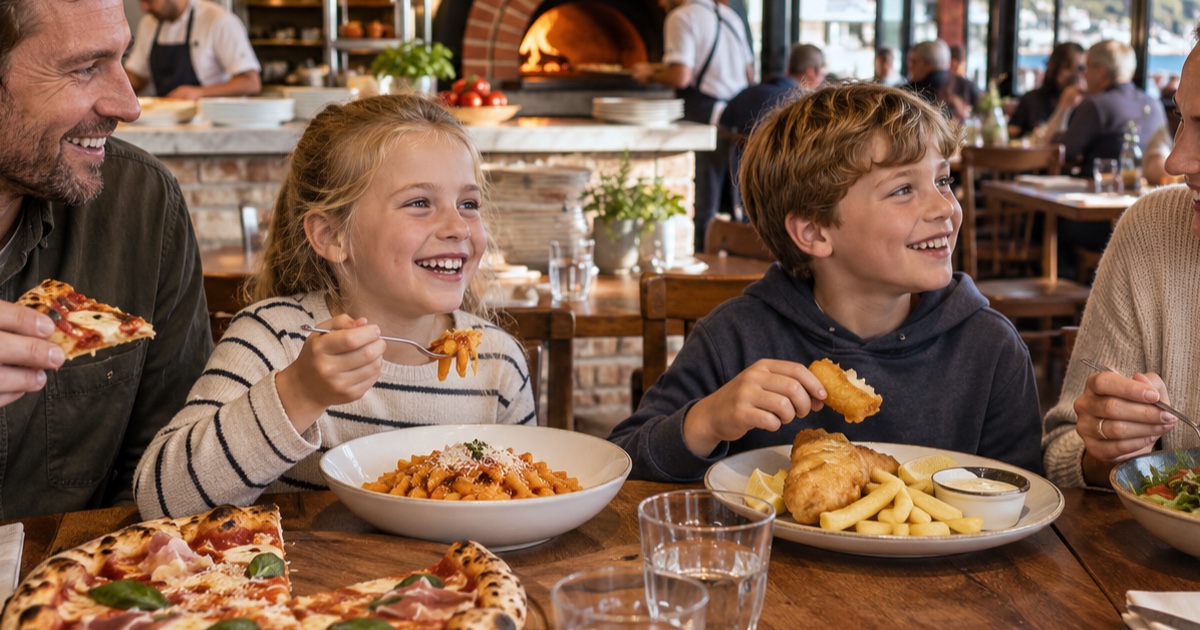
Venice’s kids menu includes approachable options such as penne, fish and chips and nuggets with chips. Check the current list and involve children at an age-appropriate level.
A smaller diner may still prefer part of an adult dish. Ask about portions rather than assuming every child needs the same menu.
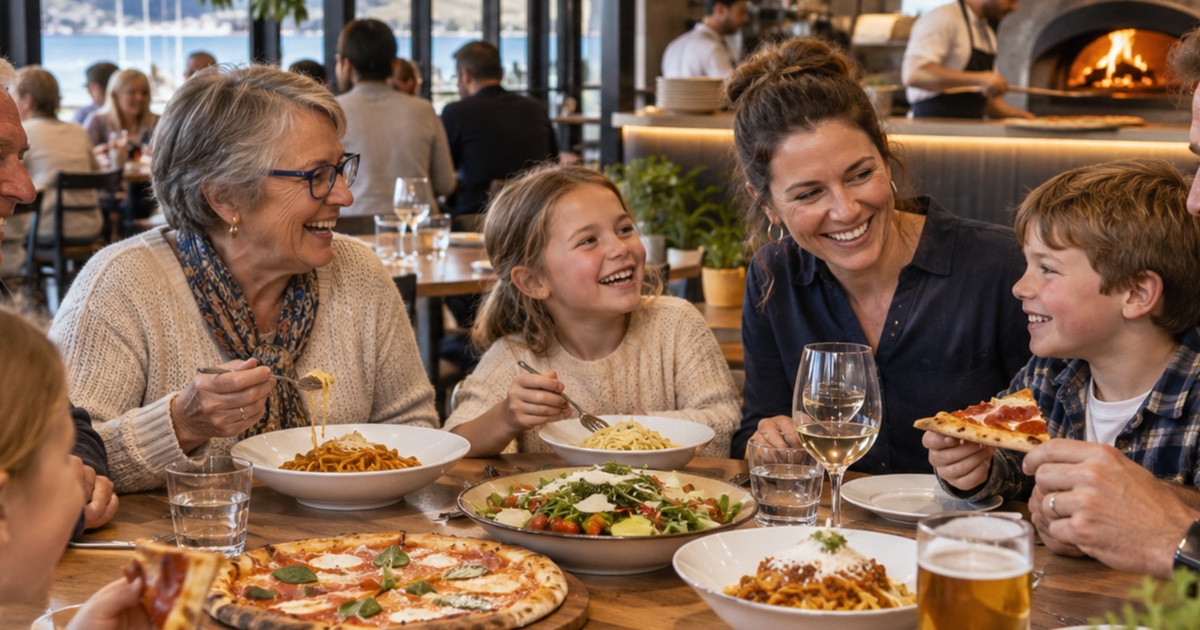
Book around the family’s real rhythm
Choose a time that respects naps, travel and bedtime. An earlier relaxed dinner is often better than a later reservation followed by pressure on the kitchen.
Tell the venue about a hard departure time and reduce the number of courses when the window is short.
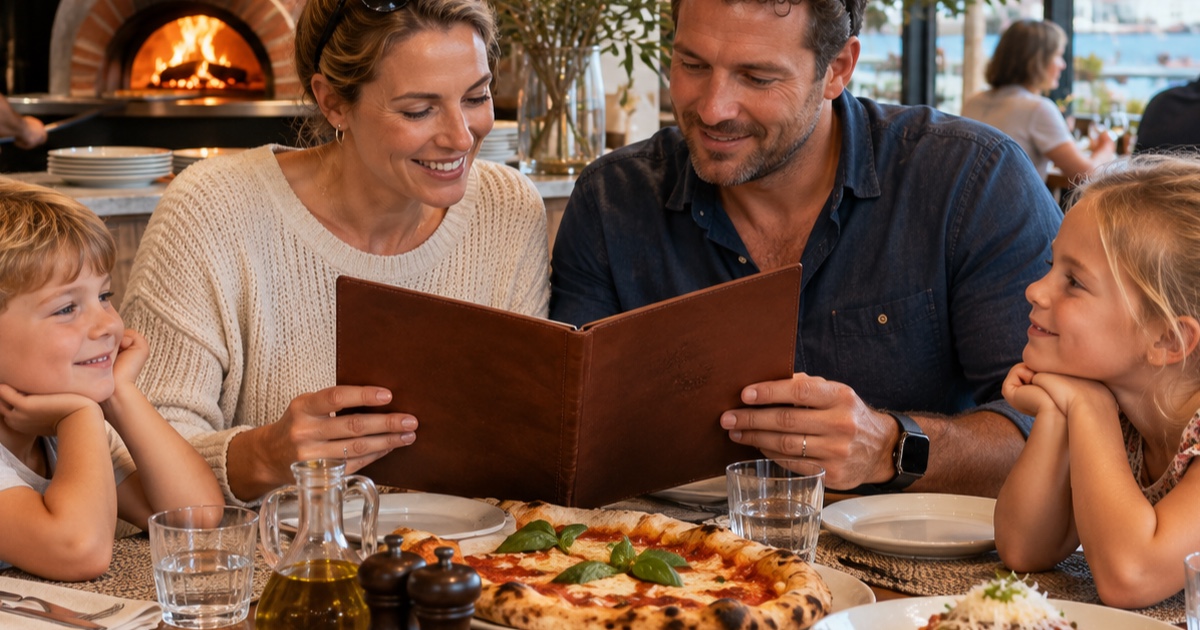
Confirm seating and circulation needs
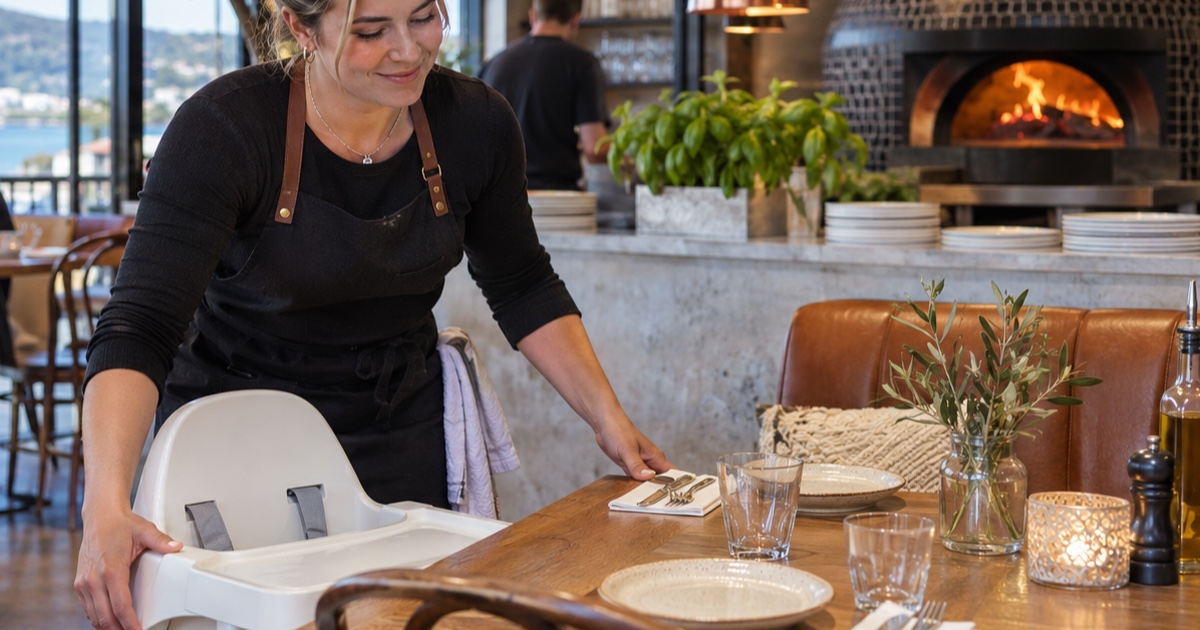
Ask about high chairs, pram space, mobility access or comfortable seating for grandparents when essential. Do not infer exact space from a wide photograph.
Give the restaurant the correct number of adults and children. That information affects the table layout.
Build one connected meal with different plates
Adults can share pizza or starters while children have clear individual meals. Salads or vegetables can add contrast without forcing every diner to eat the same food.
State which dishes are shared before they arrive. Keep allergy-related and personal orders with the intended diner.
Plan the journey and waiting time
Venice at 179 York Street can fit central Albany activities. Check parking, walking distance and weather, then nominate where relatives will meet.
Bring simple quiet activities for unavoidable waiting, but keep the table clear when food arrives and supervise children around hot plates.
Agree on payment before the bill
A multigenerational group may include several households. Ask what payment options the venue accepts and decide whether one person will pay, costs will be divided equally or transfers will happen later.
Use the booking system and update the restaurant if family numbers change.
Create a two-minute decision record
Before confirming family restaurant, write a short record with the date, time, number of diners, service type and links used to verify the plan. Add any question the restaurant answered and the name of the person responsible for future changes. This record is especially useful when a group chat has produced several possible times and screenshots from different sources. Apply this point to the specific family restaurant decision rather than to a generic restaurant plan.
Share the final version once, then ask for corrections by a clear deadline. Silence after that point can reasonably mean the details are accepted, while a new dietary or access requirement should still be handled whenever it becomes known. The purpose is clarity, not bureaucracy. Apply this point to the specific family restaurant decision rather than to a generic restaurant plan.
On the day, reopen the live booking or order confirmation rather than relying on memory. Check the address and service method one last time. A two-minute review can prevent travelling to the wrong place, arriving at the wrong hour or expecting dine-in service for an order placed as collection. Apply this point to the specific family restaurant decision rather than to a generic restaurant plan.
Keep personal and payment information out of broad group messages. Share only what other diners need to attend, such as the venue, time and organiser’s name. The person who made the booking can keep the full confirmation privately and contact the restaurant if a change is required. Apply this point to the specific family restaurant decision rather than to a generic restaurant plan.
After the meal, retain only what is useful for a future visit. The live menu and website should remain the source for new plans; an old confirmation proves what happened once, not what will be available next time. This habit prevents a convenient record from becoming outdated advice. Apply this point to the specific family restaurant decision rather than to a generic restaurant plan.
A concise record also makes cancellation or amendment easier. The organiser can locate the correct booking quickly, describe the requested change clearly and avoid creating a second reservation by mistake. It also preserves one reliable contact trail for the group. Apply this point to the specific family restaurant decision rather than to a generic restaurant plan.
Evaluate the result against the confirmed brief
After the family restaurant experience, compare what happened with the confirmed plan rather than an imagined perfect visit. Did the service type, timing, menu and essential arrangements match? Were limitations communicated? This produces a fairer assessment than focusing on one preference that was never requested. For this article, connect the check directly to the planned family restaurant service.
Separate food preference from service accuracy. A diner may personally dislike a topping even when it was described and prepared correctly. Conversely, a favourite dish does not erase a missed confirmed requirement. Keeping those categories distinct makes feedback more useful. For this article, connect the check directly to the planned family restaurant service.
If feedback is needed, give the venue a clear date, booking or order reference and a concise description. State the resolution you are seeking when appropriate. Public comments should avoid personal or sensitive details and should distinguish observation from assumption. For this article, connect the check directly to the planned family restaurant service.
Use the experience to improve the next plan, but verify live information again. Menus, hours and service options can change. A successful past booking is evidence of one occasion, not a permanent guarantee. For this article, connect the check directly to the planned family restaurant service.
Apply the plan in real Albany conditions
Treat the confirmed family restaurant arrangement as a shared commitment. The restaurant allocates space, ingredients and staff; the diner provides accurate numbers, timing and information. Both sides benefit when changes are communicated early and expectations remain connected to what was actually agreed. This mutual clarity is one of the most reliable indicators of a well-planned meal or event.
A note for the organiser
Give the group one final version of the family restaurant plan and invite corrections to essential facts, not a new vote on every preference. Keep the live menu, booking or order link in that message. Clear ownership makes it easier to update the restaurant, protects private confirmation details and lets guests focus on arriving prepared rather than reconstructing the decision.
One final principle for family restaurant: keep essential information specific and keep ordinary preferences flexible. That balance gives the restaurant a clear brief without turning a meal into a rigid script, and it gives diners a reliable plan with room for normal hospitality.
Final checks before you commit
- Check current children’s and adult choices.
- Choose a realistic family time.
- Confirm high chairs, prams or access needs.
- Keep shared and personal dishes clear.
- Plan transport and the meeting point.
- Agree on payment within the family.
A comfortable family restaurant booking starts with accurate numbers and realistic timing. Review the current menu, reserve a table and contact Venice with any essential seating or access question.
Frequently asked questions
Should families always book early?
Choose the time that suits the children and older diners. Earlier is often practical, but the right time depends on the group and current service.
Can children share adult pizza?
Yes, when ingredients and portion suit them. A children’s item can remain useful for a diner who wants a familiar plate.
How do I request a high chair?
Include the child in the party size and contact the restaurant to confirm high-chair availability for the date.
What if family numbers change?
Update the booking promptly so the table can be prepared for the correct mix of adults and children.