

This guide helps Albany diners have that conversation in a calm sequence. It does not declare any kitchen risk-free. Current information from the venue and the diner’s own threshold must guide the final decision.
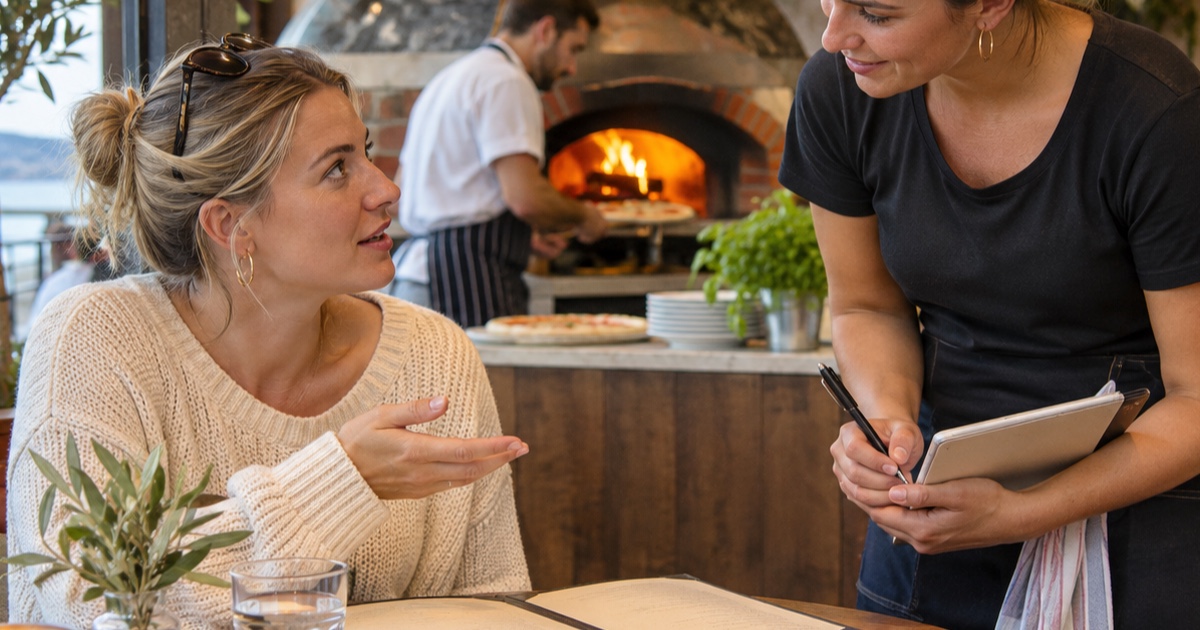
State the requirement before discussing toppings
Tell staff whether the request concerns coeliac disease, an allergy, intolerance or personal preference. Avoid abbreviations that can be misunderstood. Ask early enough that the restaurant can answer without guessing during a rush.
The diner who carries the risk should hear or approve the answer. A group organiser can make first contact, but should not simplify another person’s medical requirement into a broad label.
Check the base and every added ingredient
Ask whether the base recipe and supplier information are current, then consider sauce, cheese, meats, vegetables and finishing ingredients. A gluten-free base does not automatically make every possible topping or sauce suitable.
Recipes and suppliers can change. Use the restaurant’s current menu as a starting point and confirm the exact pizza close to the date of the order.
Ask about preparation and cross-contact
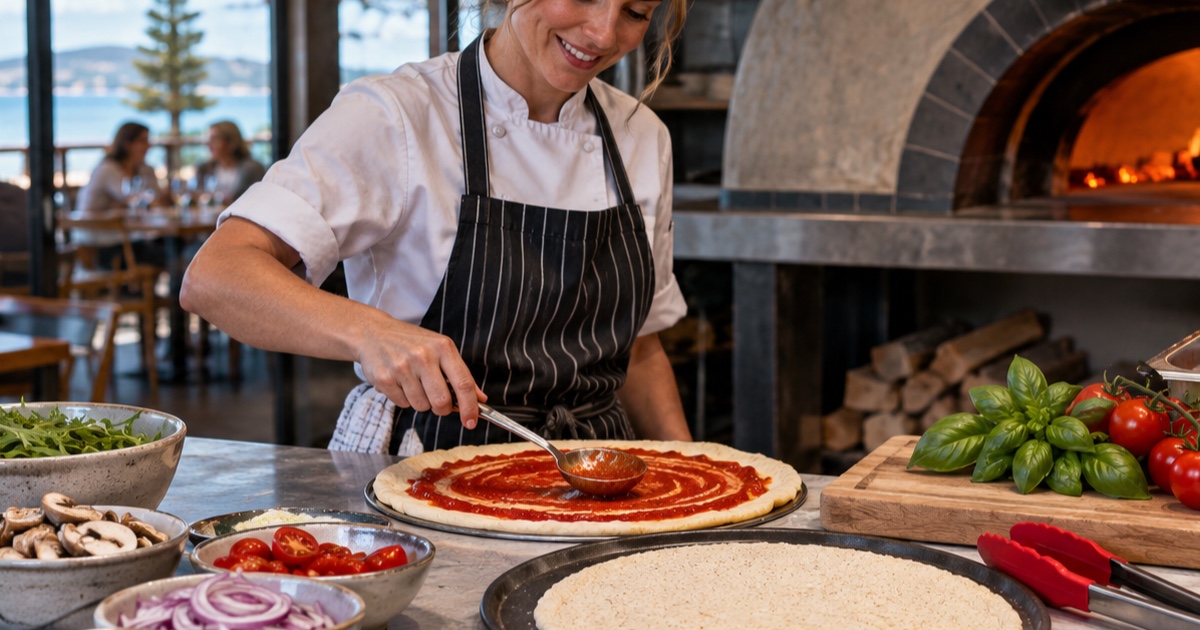
Questions may include shared benches, flour in the preparation area, utensils, trays and the oven environment. The restaurant can describe its workflow; the diner then decides whether it meets their needs.
Do not pressure staff to give an absolute guarantee when a shared kitchen cannot support one. A clear description of limitations is more useful than reassurance without detail.
Consider dine-in, pickup and delivery separately
Dine-in allows a question to be repeated when ordering. Pickup needs a clear name, time and identification of the relevant box. Delivery adds a hand-off step, so confirm how the order is marked without relying on handwritten text being perfect.
Use the official online ordering system for current service options, but contact the restaurant when the dietary conversation cannot be captured in a standard modifier.
Protect the pizza at a shared table
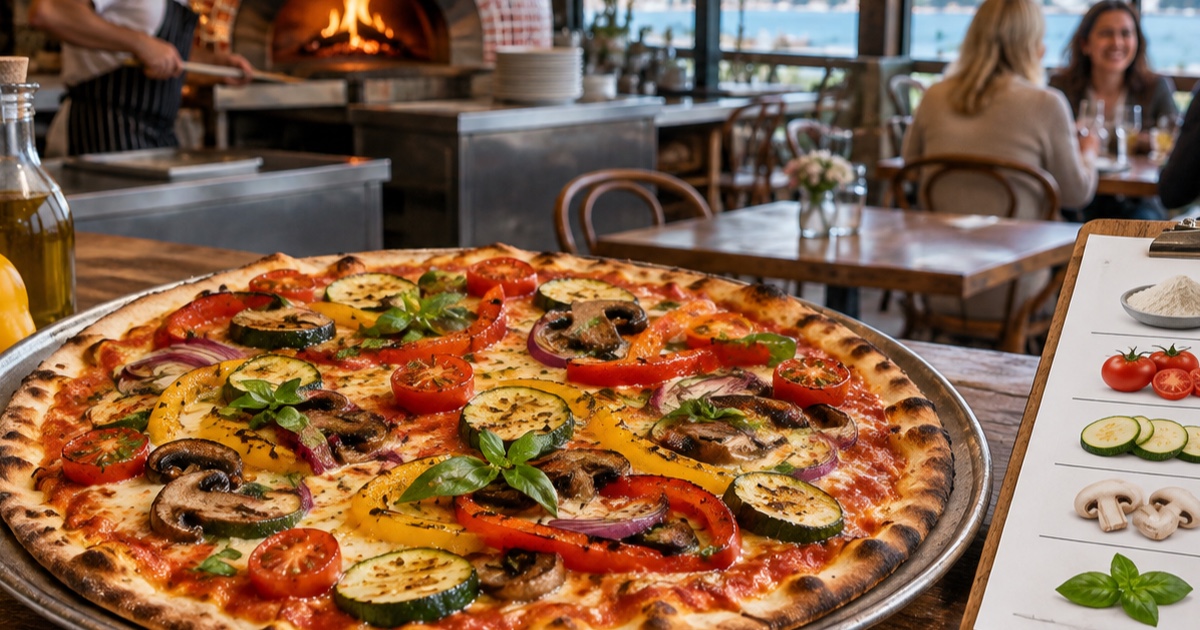
Separate serving utensils and plates can reduce avoidable mixing after service. Other diners should not move slices between boards, dip shared utensils into several dishes or place ordinary bread over the dietary meal.
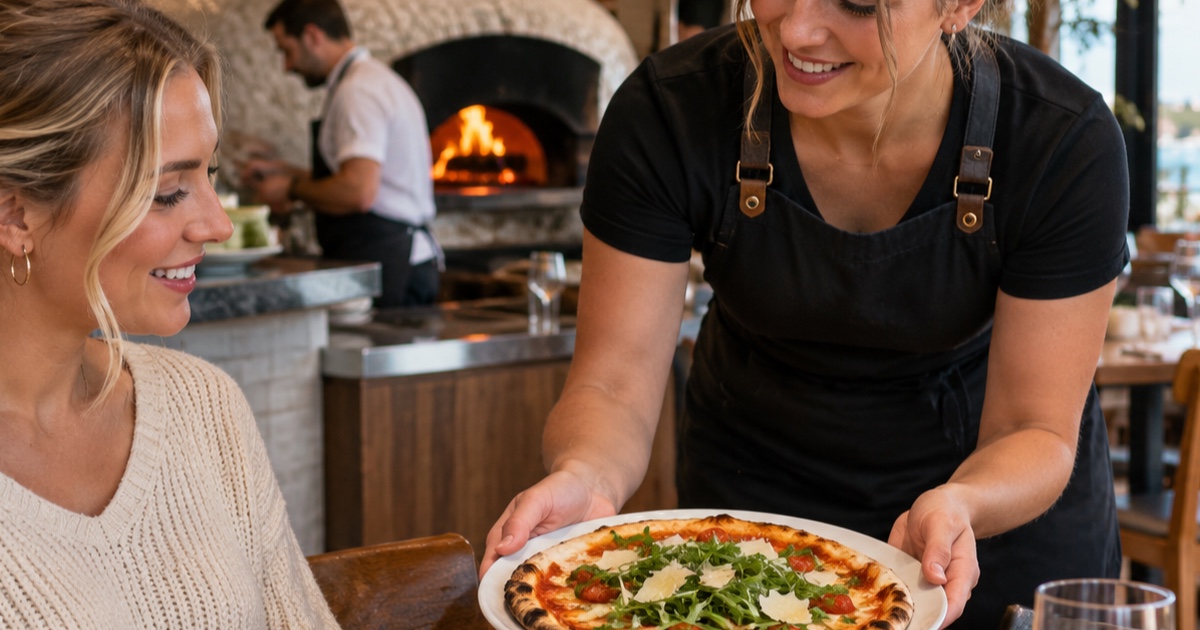
A gluten-free pizza should not automatically be treated as communal. Agree who it is for before the food arrives, especially when several similar-looking pizzas are ordered.
Make the decision from the answer you receive
Write down the dish and preparation details that were discussed, including any limitation. If the information is not sufficient, choose another dish or another plan without asking staff to minimise the concern.
For dine-in, use the booking page and mention that a dietary conversation is required. Reconfirm on arrival because the person serving the table may not have handled the earlier enquiry.
Use a source hierarchy instead of collecting endless tabs
When researching gluten free pizza, give each source a job. The restaurant’s current menu, booking system and contact page are the primary sources for present services. A map helps with distance and transport. Recent reviews can provide subjective context, but they should not overrule current menu details or a direct answer from the venue. This hierarchy makes the research faster because every question has an appropriate place to be checked. Apply this point to the specific gluten free pizza decision rather than to a generic restaurant plan.
Capture only the facts the group will need: address, booking time, party size, confirmation reference and any agreed arrangement. Avoid circulating multiple screenshots with different dates. One short message with the live links is easier to update and less likely to send a diner to an old menu. Apply this point to the specific gluten free pizza decision rather than to a generic restaurant plan.
If a detail remains unclear, convert it into a single question and contact the restaurant. A precise call or message often resolves more than another page of search results. Record the answer in the group plan so the same question is not repeated by several people. Apply this point to the specific gluten free pizza decision rather than to a generic restaurant plan.
Be cautious with information that has no visible date or source. A beautifully designed menu file may still be old, and an automated listing may merge details from different services. When two sources conflict, prefer the restaurant’s live channel or ask directly. The extra check is worthwhile when it affects cost, safety or whether the group can attend. Apply this point to the specific gluten free pizza decision rather than to a generic restaurant plan.
Set a time limit for research. Once the essential questions are answered, more browsing often adds opinions rather than useful facts. Make the booking, circulate the confirmed details and keep one official link for later reference. This approach is both faster and less vulnerable to outdated information. Apply this point to the specific gluten free pizza decision rather than to a generic restaurant plan.
Plan one clear communication chain
A strong gluten free pizza plan has one organiser, one restaurant contact path and one final version of the details. Guests can still make their own menu choices, but changes to the booking or order should move through the organiser. This prevents duplicate calls, conflicting instructions and several people assuming somebody else confirmed the important point. For this article, connect the check directly to the planned gluten free pizza service.
Write questions in plain language. Include the date or order name, then ask one thing at a time. A concise question about an ingredient, pickup time or table arrangement is easier to answer accurately than a long message combining every preference the group discussed. For this article, connect the check directly to the planned gluten free pizza service.
After receiving an answer, repeat the practical conclusion in your own words and ask for correction if needed. This is especially useful for dietary requirements, function inclusions and timing. It catches misunderstandings without turning the exchange into an argument. For this article, connect the check directly to the planned gluten free pizza service.
On the day, introduce the organiser to the relevant staff member and keep other requests within the agreed plan. New information should still be raised, but casual changes should not be presented as if they were part of the original confirmation. For this article, connect the check directly to the planned gluten free pizza service.
Apply the plan in real Albany conditions
Keep the planning proportional to the occasion. A casual gluten free pizza meal may need only a current menu and confirmed time, while a large group needs documented numbers and responsibilities. Use more detail only where the consequence justifies it. Overplanning every preference can make a simple meal harder; underplanning an essential requirement can make the booking unusable. The right level is the smallest plan that answers the important questions.
Final checks before you commit
- Name the medical or personal requirement accurately.
- Check the base, sauce and toppings.
- Ask about shared flour, benches, tools and oven conditions.
- Confirm how the order will be identified.
- Keep the pizza and utensils separate at the table.
- Accept stated limitations and make your own informed decision.
A careful gluten free pizza order is a conversation, not a checkbox. Review the current menu, contact Venice with the exact requirement and choose dine-in or online ordering only after the preparation details are understood.
Frequently asked questions
Is a gluten-free base enough to make a pizza suitable for coeliac disease?
Not necessarily. Ingredients and cross-contact during preparation and baking also matter. Ask the restaurant about the full process.
Should I place the order online or call?
Use online ordering for current options, but call when the system cannot communicate the exact dietary requirement or preparation question.
Can a shared wood-fired oven create cross-contact?
A shared environment may matter to some diners. Ask how the restaurant manages the oven and surrounding preparation, then decide from the answer.
When should I reconfirm the requirement?
Confirm before ordering and again at collection or table service so the relevant meal is correctly identified.