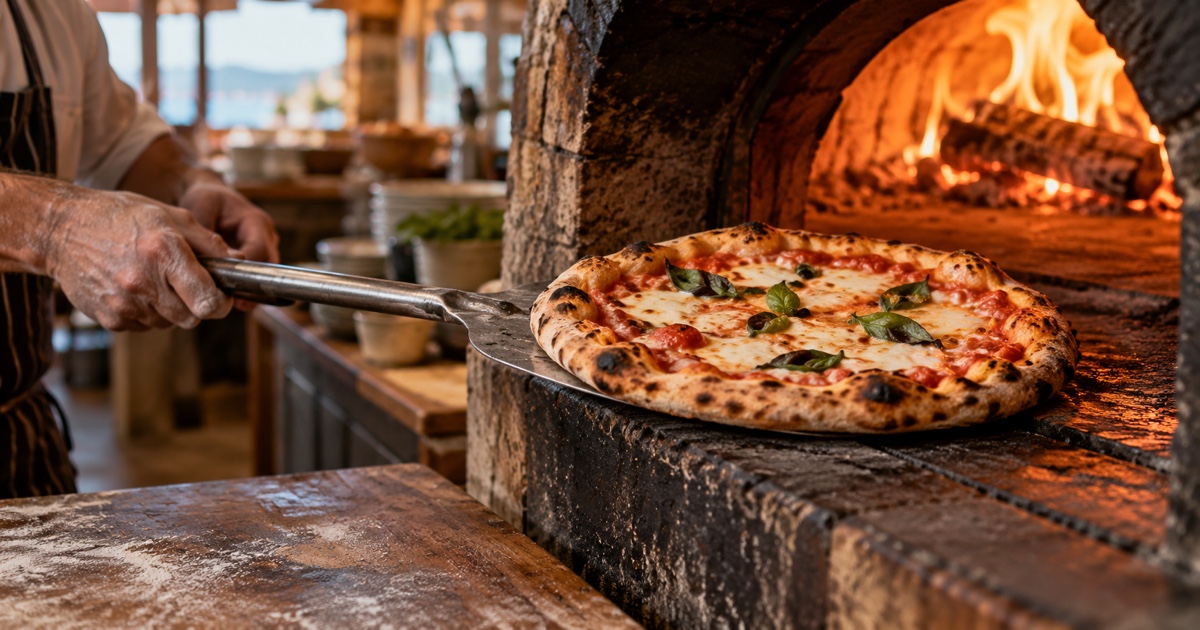
This guide follows the journey from reading the menu at home to finishing the meal. It is designed for diners in Albany who want to order comfortably, ask useful questions and enjoy a balanced selection. There is no requirement to copy a formal multi-course meal. The best order is the one that fits your appetite, time and companions.
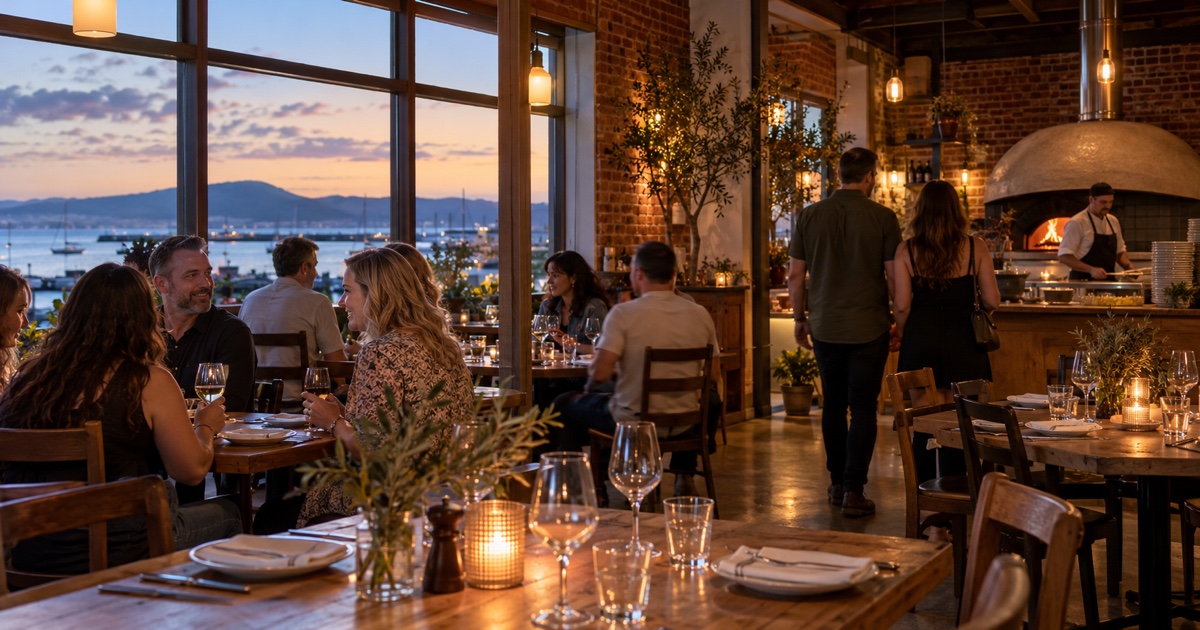
Step 1: Read the current menu before you are hungry
Open the restaurant’s own menu rather than relying on a third-party summary. Venice’s current menu groups choices across starters, wood-fired pizza, pasta and risotto, seafood, meat and poultry, salads, sides, children’s meals and drinks. Reading those categories once before the visit makes the in-person decision calmer.
Look for two or three dishes that appeal, not one perfect answer. You may arrive wanting pasta and discover that the table would prefer to share pizza. A short list gives you flexibility without forcing you to reread the entire menu while everyone waits.
If you have an allergy, intolerance or other dietary requirement, identify it plainly and contact the restaurant with enough time for a useful answer. Menu symbols are a starting point, not a complete description of preparation or cross-contact. Ask about the exact dish and your exact requirement.
Step 2: Decide whether the table needs a starter
A starter can create an easy beginning while the group settles, but it is optional. At Venice, the menu has included choices such as garlic bread, pinsa bread, bruschetta, cacciatore sausage and arancini. Check the current list and consider how the starter relates to the mains rather than choosing it in isolation.
If several diners expect rich pasta or generous pizza, one fresh or crisp starter may be enough. If the group has arrived very hungry, bread can make the wait more comfortable, though ordering several bread-based starters before pizza can create repetition. Think in terms of contrast: warm and cool, crisp and soft, vegetable-led and cheese-led.
Ask before assuming a starter is designed for a particular number of people. Plates, piece counts and serving sizes differ. For a table that does not want to share, each diner can simply begin with a small individual choice or move directly to a main.
Step 3: Choose between pizza, pasta and the broader menu
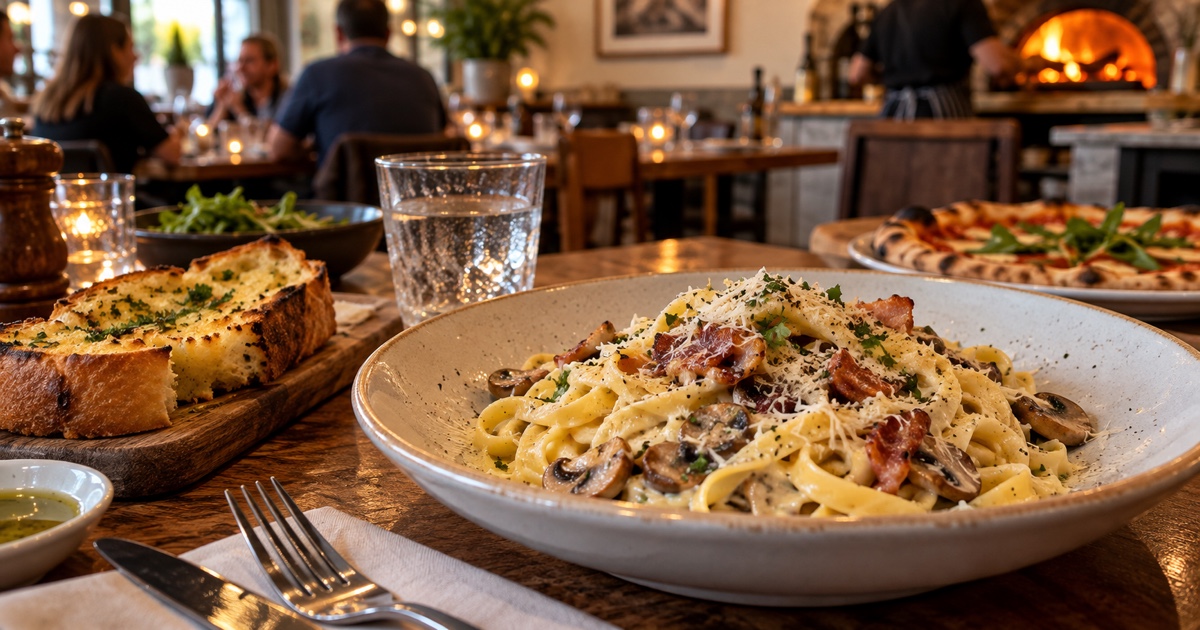
Pizza offers a baked base, melted cheese and toppings in one structured dish. Pasta places more emphasis on the relationship between shape and sauce. Neither is the more authentic choice by default, and an Italian restaurant can reasonably offer seafood, meat, poultry, salads and risotto alongside both.
When reading pizza descriptions, notice the full combination. A familiar topping can taste different beside olives, capsicum, eggplant, garlic or seafood. The Vegetarian pizza listed by Venice, for example, brings together mozzarella, capsicum, olives, onion, mushrooms, fresh tomato, eggplant and garlic. That is a layered vegetable profile rather than a blank pizza with meat removed.
For pasta, identify the sauce style and the main ingredient. Venice’s menu has included fettuccine carbonara, spaghetti bolognese, marinara, linguine with chilli prawns, agnolotti, conchiglie, penne boscaiola and beef tortellini. A creamy sauce, tomato-based ragù, seafood sauce and filled pasta create distinct meals even before portion size is considered.
If you cannot decide, ask a concrete question: “I prefer a tomato-based pasta without seafood; which current dish should I consider?” That gives staff more information than asking for the best pasta. Personal taste is not a ranking that another person can solve without clues.
Step 4: Add balance only where it helps
A side salad or vegetables can add freshness to a rich meal, but an extra dish should have a purpose. Do not add sides automatically because a menu has a separate category. Look at what the group has already ordered and decide whether another texture, vegetable component or shared plate would improve it.
Drinks can follow the same principle. Choose something you enjoy and that suits the pace of the meal. Water on the table is practical regardless of the rest of the order. If you have questions about the drinks list or service, ask the restaurant rather than inferring details from an old review.
For children, check the current kids menu and involve them in choosing an approachable option. A child does not need to share every adult dish for the meal to feel connected. Giving younger diners a clear plate can help the rest of the table explore more varied food without pressure.
Step 5: Make sharing and pacing explicit
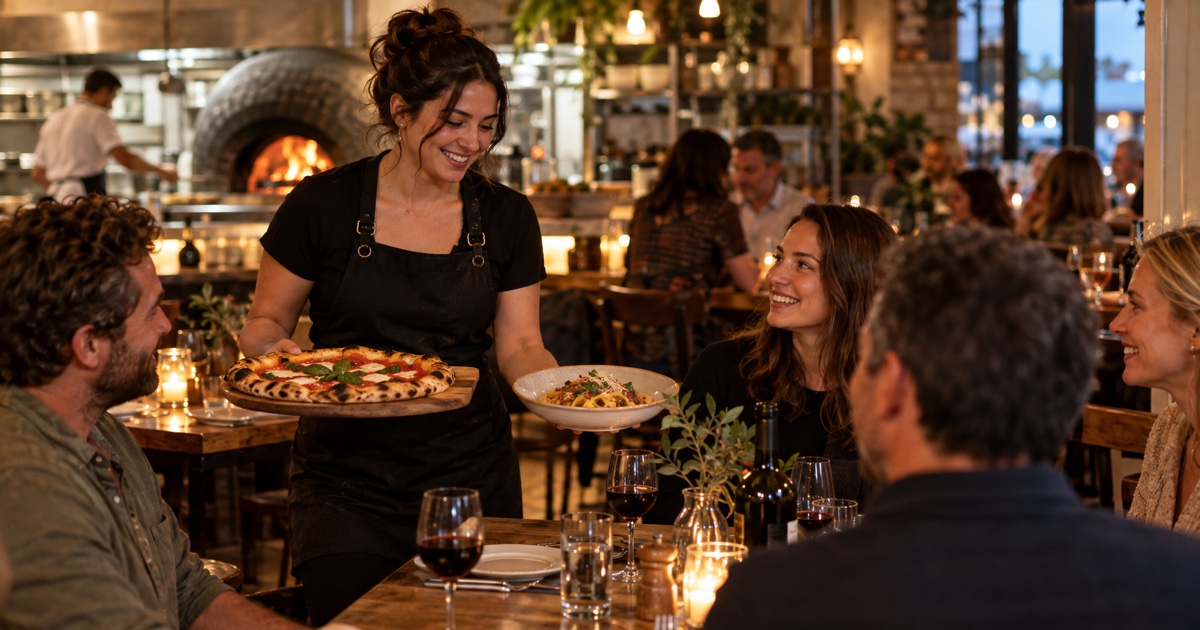
If the table is sharing, begin with modest portions. That leaves room to compare the pizza and pasta without filling a plate with several sauces at once. Keep serving utensils with their dishes, and do not move food into a diner’s plate until you know they want it.
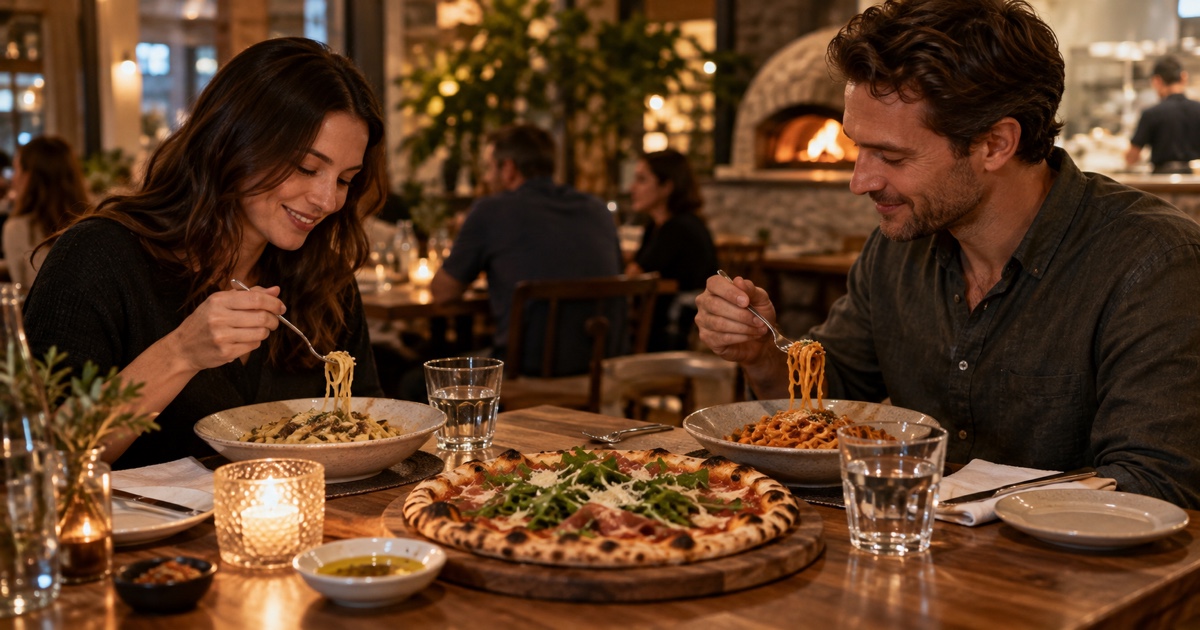
Italian dining does not require a rigid ceremony. Some groups enjoy a starter followed by individual mains; others place pizza and pasta in the centre. Couples may share one item and keep another separate. The comfortable approach is to tell the server how the table intends to eat so plates and timing can be arranged sensibly.
Allow the meal to breathe. A few minutes between dishes is not wasted time when conversation is part of the evening. If you have a fixed departure, mention it when booking and order with that limit in mind. The official reservation page can secure a table, while a direct enquiry is better for unusual timing or group needs.
Three first-time mistakes that are easy to avoid
Ordering by the shortest description. A familiar name can still contain ingredients you did not expect. Read the full description and ask where it is unclear.
Making every dish rich. Creamy pasta, heavily topped pizza and several cheese-led starters may taste good separately but compete as one meal. Include contrast if that matters to your group.
Staying silent about dietary needs. A preference, intolerance and diagnosed allergy are not interchangeable. State the requirement accurately and ask about the specific order before it is prepared.
Order with curiosity, not pressure
Your first visit to an Italian restaurant near me does not need a perfect script. Preview the menu, choose a useful beginning, compare the main styles and explain what the table wants to share. Clear choices create space to notice the food and hospitality instead of worrying about rules.
Plan your visit to Venice Albany: explore the menu, book a table, or use the contact page for a question that needs a direct answer.
Frequently asked questions
Do I need to order several courses?
No. A starter and main, one main, or shared dishes can all work. Match the order to your appetite and available time.
Is pizza normally shared at an Italian restaurant?
It can be shared, but it does not have to be. Tell your companions and server whether pizzas are communal or individual.
What should I ask about a dish?
Ask about the feature that affects your choice: sauce style, main ingredients, heat, dietary suitability or serving arrangement. A specific question receives a more useful answer.
Can I order takeaway instead of dining in?
Venice provides an official online ordering path. Review the current service options, cart and collection or delivery details before payment.