

This guide compares two useful questions: whether the pizza meets the diner’s definition of vegetarian, and whether it will be enjoyable as a whole meal. Those questions overlap, but neither should replace the other.
Step 1: Confirm what vegetarian means for the diner
Some diners avoid meat only; others also ask about animal-derived rennet, seafood, stocks or sauces. State the preference rather than expecting one universal definition.
If the choice is connected to an allergy or medical need, treat it as a separate dietary conversation. Vegetarian status alone does not describe gluten, nuts, dairy or kitchen cross-contact.
Step 2: Compare topping combinations, not topping counts
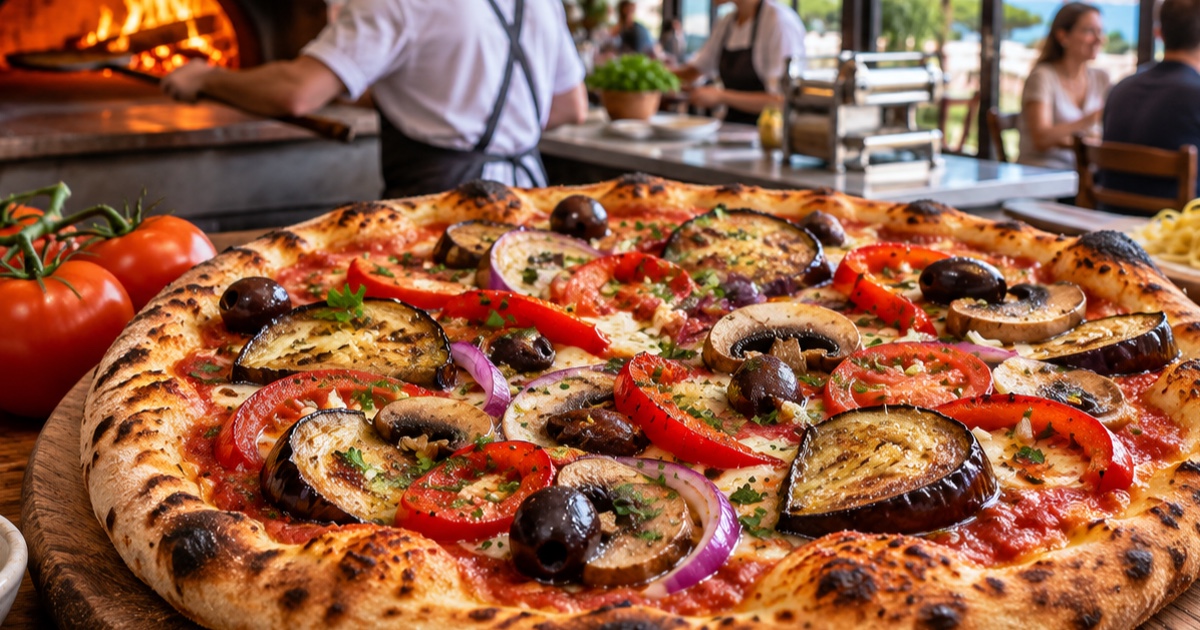
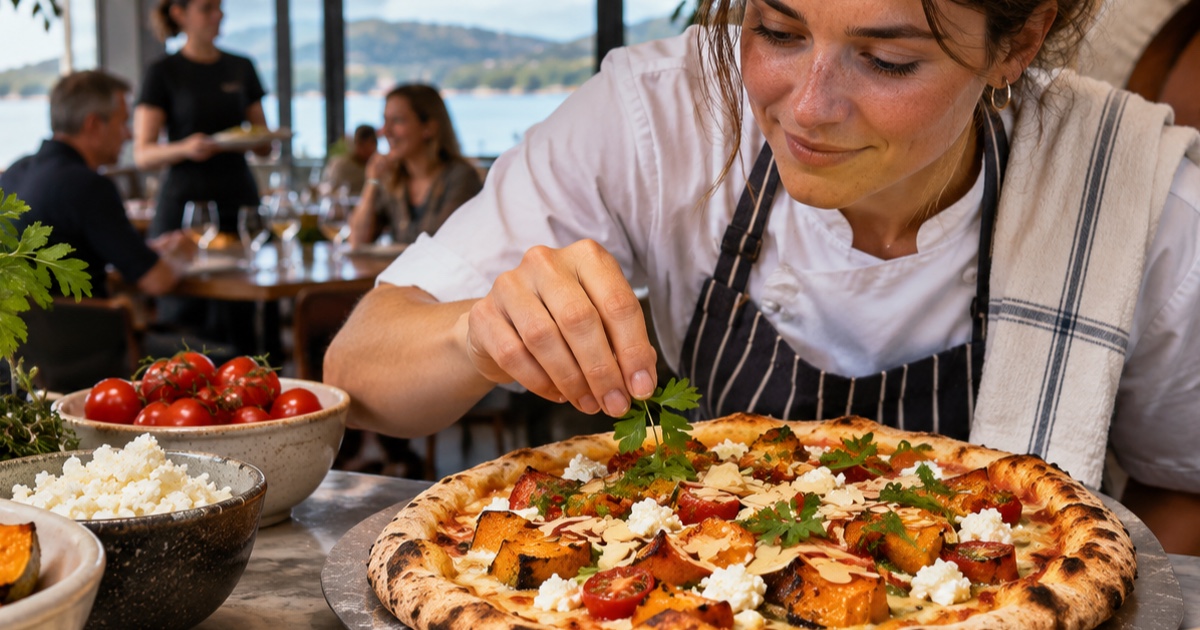
Venice lists a Vegetarian pizza with mozzarella, capsicum, olives, onion, mushrooms, fresh tomato, eggplant and garlic. Its Zucca combination uses roast pumpkin, shaved almonds, feta and cherry tomatoes. Check the current menu because availability can change.
A long list can create moisture and competing flavours when proportions are poor. Choose a combination whose salty, sweet, earthy and fresh elements make sense together.
Step 3: Check cheese, sauce and finishing ingredients
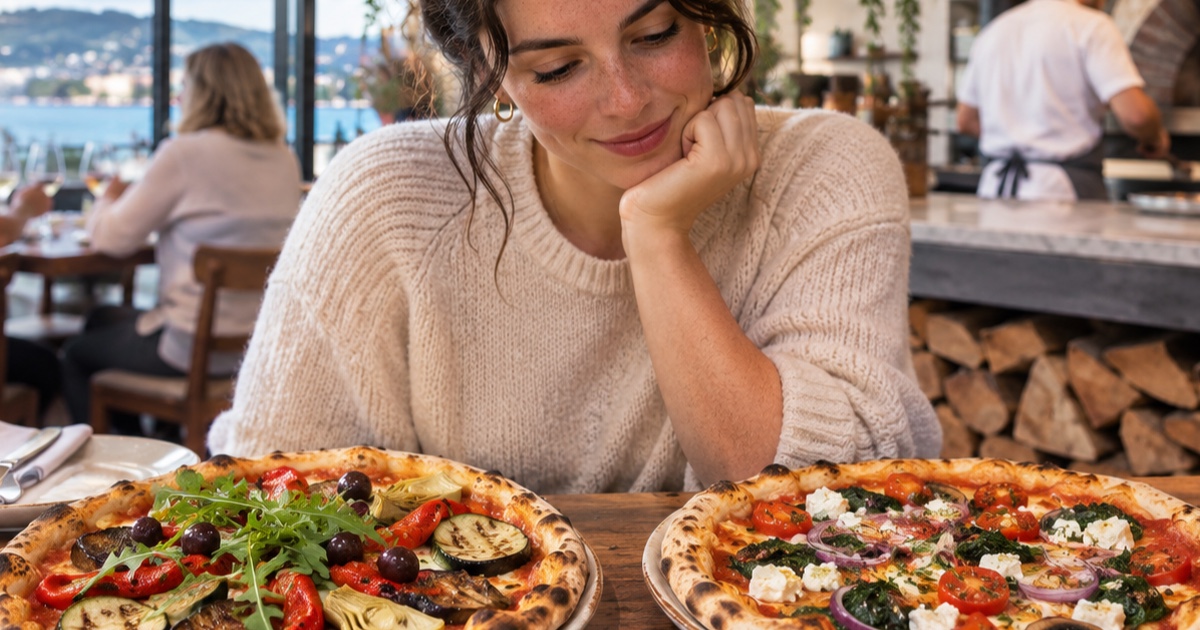
Ask about cheese or sauce when the diner’s definition requires it. Pesto, dressings and finishing garnishes may contain ingredients that are not obvious from the pizza’s headline name.
A cheese-free modification also changes moisture and structure. Ask what the kitchen recommends rather than removing several ingredients and expecting the original balance to remain.
Step 4: Plan for sharing without losing the vegetarian choice
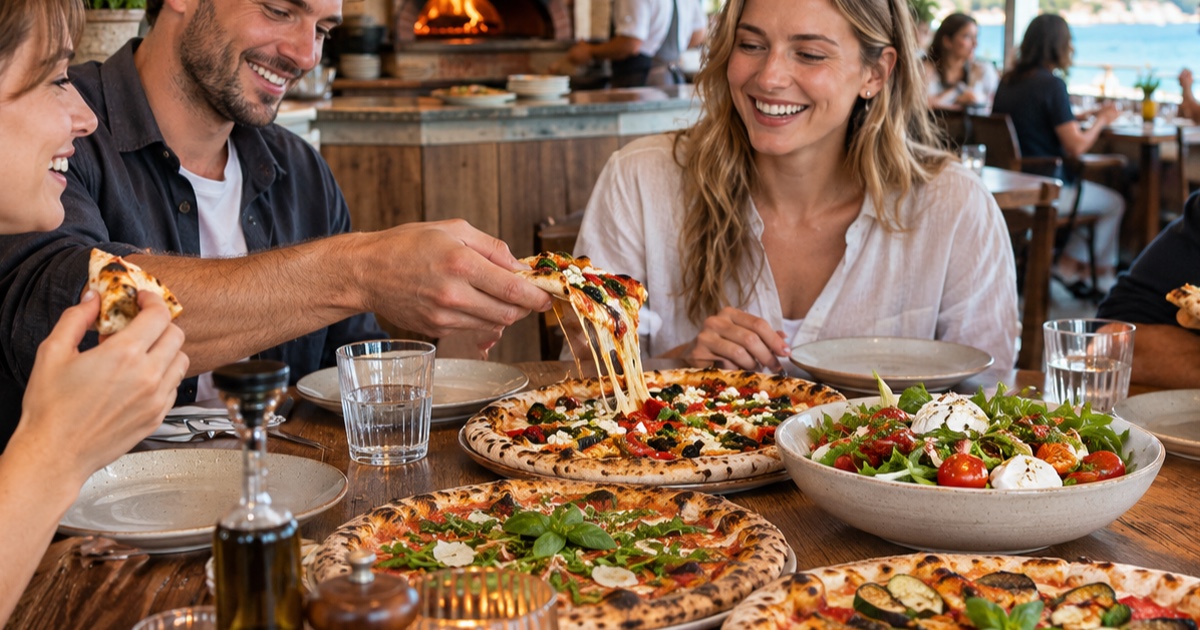
When a mixed group orders several pizzas, decide whether the vegetarian pizza is reserved for particular diners or shared by everyone. If it disappears first, vegetarian guests may be left with fewer options.
Use separate serving utensils when preferences or allergies make mixing a concern. Do not place meat slices temporarily on the vegetarian board.
Step 5: Check whether the meal needs a balancing side
A vegetable pizza may already provide variety, while a fresh salad can add crispness and acidity for a group. Bread or another cheese-heavy starter may simply repeat the same flavours.
Look across the whole order. A shared Italian salad, bruschetta or vegetable side can support the table when it adds contrast rather than volume.
Step 6: Confirm modifications and service method
For dine-in, ask the server to repeat any material change. For takeaway, review the cart, pickup time and box identification. Use the official online page for current items.
If the modifier does not express the requirement clearly, contact the restaurant before paying. A note field is not a substitute for confirmation when the change is essential.
Run a friction audit from arrival to payment
Picture the vegetarian pizza visit as a sequence: travelling to the venue, arriving, being seated, ordering, eating, paying and leaving for the next part of the day. At each stage, ask whether the group has a special condition. A pram, mobility need, late arrival, separate payment expectation or hard departure time may be easy to handle when mentioned early and awkward when discovered at the last minute. Apply this point to the specific vegetarian pizza decision rather than to a generic restaurant plan.
This audit is not a demand for perfect control. It is a way to identify the two or three moments that deserve communication. Most of the meal can remain relaxed. The organiser should not attempt to script every plate or conversation, and the restaurant should have room to provide normal hospitality. Apply this point to the specific vegetarian pizza decision rather than to a generic restaurant plan.
Finish by deciding how payment will work. One payer, equal splitting and itemised payments create different tasks, especially when food is shared. Ask what the venue accepts and organise transfers within the group before the bill becomes the final source of confusion. Apply this point to the specific vegetarian pizza decision rather than to a generic restaurant plan.
Repeat the audit when the plan changes materially. A larger party may need a different table, a later time may affect a following event, and a switch to takeaway changes transport and serving needs. Small changes can remain small when their consequences are checked before the restaurant begins preparing for the original plan. Apply this point to the specific vegetarian pizza decision rather than to a generic restaurant plan.
Do not confuse flexibility with silence. Restaurants can often help when they know what has changed, but they cannot prepare for information they have not received. One prompt update from the organiser is more effective than several guests making separate requests on arrival. Apply this point to the specific vegetarian pizza decision rather than to a generic restaurant plan.
Use decision gates to avoid premature booking
Move a vegetarian pizza plan through three gates. The first gate is suitability: the menu and service must cover the essential needs. The second is availability: the date, time and space must be genuinely offered. The third is confirmation: the booking or order details must match what the group intends. Do not treat a promising menu as proof that all three gates are open. For this article, connect the check directly to the planned vegetarian pizza service.
At the suitability gate, separate requirements from nice-to-have features. At availability, provide accurate numbers and timing. At confirmation, read every field rather than assuming the system copied the discussion correctly. Each gate has a different purpose and a different source of evidence. For this article, connect the check directly to the planned vegetarian pizza service.
If a gate fails, return only to the decision that changed. A new time does not require the group to debate every topping again; a changed dietary need does require the menu fit to be checked. This keeps revisions proportionate. For this article, connect the check directly to the planned vegetarian pizza service.
Set a deadline for passing the final gate. The venue needs time to prepare and guests need a stable plan. After confirmation, update rather than recreate the booking so that one record remains authoritative. For this article, connect the check directly to the planned vegetarian pizza service.
Apply the plan in real Albany conditions
Remember that hospitality is a live service. Even with a confirmed vegetarian pizza plan, handmade food and a working dining room include normal variation. Judge the result by whether the restaurant communicated, delivered the agreed essentials and responded reasonably to change. Precision is appropriate for safety, payment and timing; flexibility is appropriate for small variations that do not alter the purpose of the meal.
Final checks before you commit
- Define vegetarian requirements clearly.
- Read sauce, cheese and garnish details.
- Choose a balanced combination rather than the longest list.
- Reserve enough vegetarian food for the diners who need it.
- Add sides only when they bring contrast.
- Repeat essential modifications at ordering and collection.
The best vegetarian pizza order protects the diner’s requirements and still tastes intentional. Browse the Venice pizza menu, book a table for dine-in or check online ordering for current takeaway choices.
Frequently asked questions
Is every cheese suitable for every vegetarian?
No. Individual definitions differ and some diners ask about rennet. Ask about the cheese when that detail matters.
Is a vegetarian pizza automatically vegan?
No. It commonly contains cheese and may include other animal-derived ingredients. Ask for current vegan options or possible changes.
How many vegetarian pizzas should a group order?
Base the number on diners, pizza size, appetite and other food. Ask the restaurant for guidance for the actual group.
Can I customise toppings online?
Available modifiers appear in the current ordering system. Contact the restaurant if an essential change is not clearly supported.